 ← All regions
 Prato
Italy's textile capital turned contemporary-art hub, with a castle and a famous cantuccio biscuit.
What to see.
Centro Pecci (contemporary art)
Highlight · Prato
Castello dell'Imperatore
Highlight · Prato
Cantucci di Prato
Highlight · Prato
Textile Museum
Highlight · Prato
About Prato
A short history
Prato has been Italy's textile capital since the 13th century. Wool from across Europe arrived here to be spun, woven, dyed and finished, and the city's most famous medieval citizen — Francesco di Marco Datini (1335–1410) — invented modern commercial accounting to manage his Prato-Avignon-Barcelona wool empire. His house and meticulously preserved 14,000-letter correspondence archive survive intact, the oldest complete business archive in Europe.
By the 19th century Prato had pioneered the recycling of textiles — taking apart used wool garments, re-spinning the fibre into new fabric. By the late 20th century the city was processing a third of Europe's recycled wool. The factories closed or shrank in the 2000s as Chinese fast-fashion outcompeted them; the remarkable consequence is that Prato now has the second-largest Chinese community in Europe (after Paris), supporting a vibrant Chinatown around Via Pistoiese.
The textile heritage funded culture: the Centro Pecci is one of Italy's most important contemporary-art museums, the Palazzo Pretorio holds Renaissance treasures most provincial cities would envy, and Prato Cathedral has frescos by Filippo Lippi that rival anything in Florence.
Where to base
Most travellers visit Prato as a day trip from Florence (20 minutes by train) or pair it with Pistoia. One night unlocks the evening — like Pistoia, the city is properly local after 6pm.
Centro storico. The walking grid between Piazza del Duomo and the Castello dell'Imperatore. Small hotels and B&Bs €80–€130/night.
Carmignano hills (15km west). Wine country and agriturismi. Best for a 2-night stay combining city + countryside.
What to see
Cathedral and Filippo Lippi frescoes. The Cappella Maggiore of the duomo holds Lippi's Stories of John the Baptist and Stephen the Protomartyr (1452–1465) — one of the great undervisited fresco cycles of the Italian Renaissance. €5 timed entry, often empty.
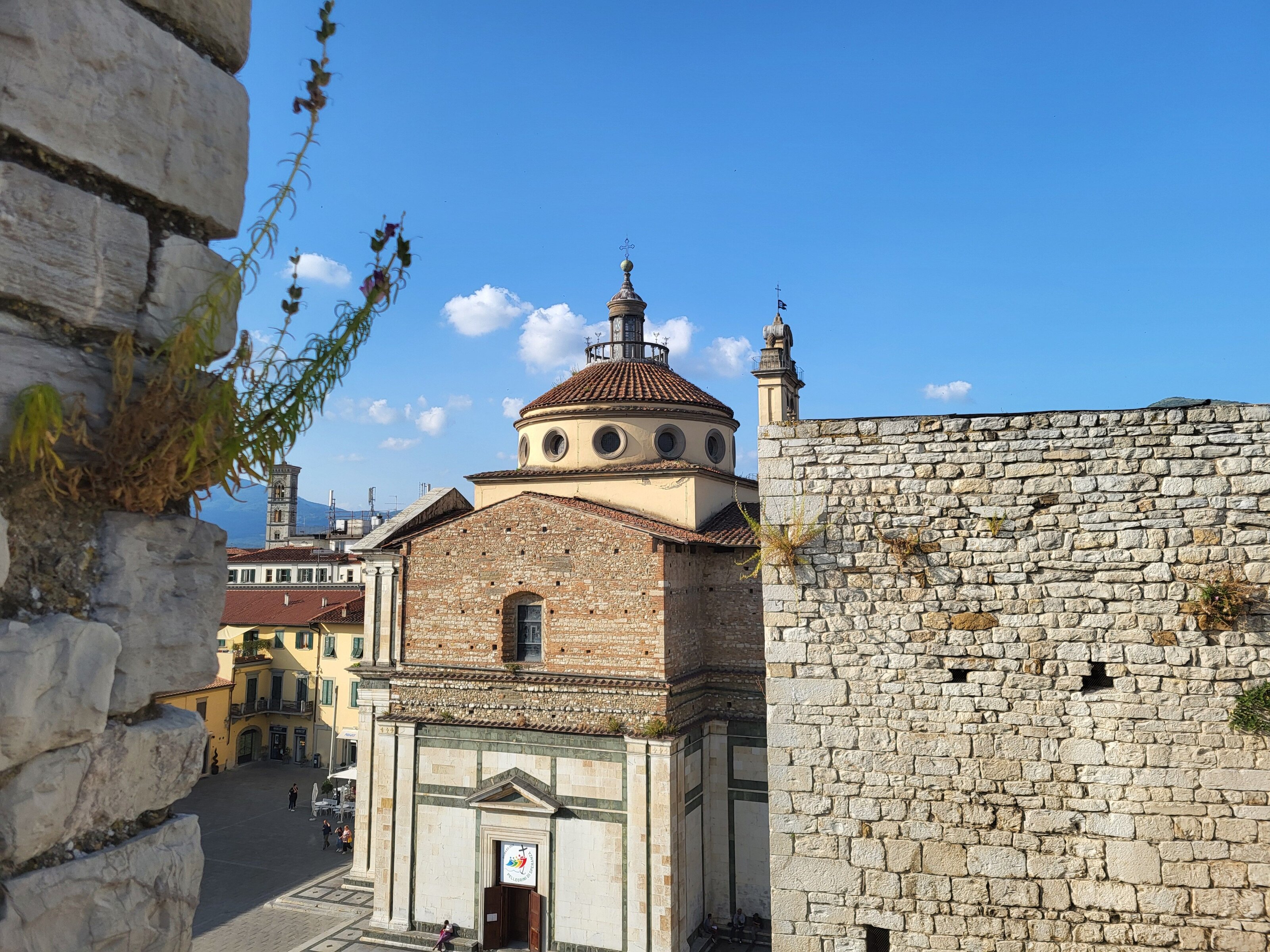
Castello dell'Imperatore. Frederick II's 13th-century fortress, the only example of Swabian Gothic military architecture in central Italy. Climb the bastions for a view across the medieval centre.
Centro per l'Arte Contemporanea Luigi Pecci. Italy's first purpose-built contemporary-art museum (1988). Excellent rotating shows; the building itself (extended by NIO Architecten in 2016) is worth visiting on its own merit. €10.
Palazzo Pretorio. Just reopened after 15 years' restoration. Collection includes Filippo Lippi's Madonna del Ceppo, a Giovanni Bellini, and a Donatello Madonna.
Chinatown (around Via Pistoiese). Genuinely Chinese — not a tourist district. The best Sichuan and Fujian food in Italy outside Milan. Lunch at Da Pio (Sichuan), Vecchio Forno (Fujian).
Cantucci di Prato. The almond biscuits that are Prato's culinary signature. Buy them direct from Antonio Mattei (Via Ricasoli), in business since 1858. Take them home in the iconic blue paper bags.
What to skip
Quick stop tours that don't enter the cathedral. The Lippi frescoes are the reason to come; skipping them removes 70% of the city's value.
The textile museum on a Monday. Closed Mondays. Disappointing the rest of the week unless textile history is a specific interest.
Best time to visit
Year-round. Prato isn't seasonal in the way coastal Tuscany is. The cathedral, Centro Pecci and Chinatown are equally good in February as in September.
Festa della Sacra Cintola (8 September). The Cintola — the belt of the Virgin Mary, kept in the cathedral — is shown from the external pulpit five times a year (Easter, 1 May, 15 August, 8 September, 25 December). The 8 September showing has the largest procession.
Avoid August. Many restaurants close for ferie; the city goes quiet.
Getting there
By train. Florence Santa Maria Novella → Prato Centrale: 20 minutes regional (€2.80), 4 trains per hour. The station is 5 minutes' walk from Piazza del Duomo.
By car. A1 Autostrada from Florence: 25 minutes. A11 from Pisa: 1h.
Day trips from Prato
Florence — 20 minutes by train. Easy to combine.
Pistoia — 15 minutes by train west. The natural pairing for a Prato + Pistoia day.
Carmignano — 15 minutes by car. Wine villages and the Carmignano DOCG vineyards — see the wider food and wine pillar for the DOCG landscape. The Visit Carmignano route covers six producers in a half-day.
Vinci — 35 minutes by car. Leonardo's birthplace; the Museo Leonardiano holds working models of his machines.
Practicalities
Eat. Mortadella di Prato (a peppered pork sausage with myrtle berries, slow-aged), bozza pratese (the local bread), sedani alla pratese (celery braised with bone marrow). Cantucci di Prato dipped in Vin Santo. Drink Carmignano DOCG (one of Italy's smallest and oldest red-wine appellations).
Festivals. Sagra dei Cantucci (June), Contemporanea Festival (theatre + dance, June), Festa della Sacra Cintola (8 September).
Read first. Our practical-basics guide; pair with Florence or Pistoia.
Read our practical basics before you book — when to come, where to base, how to get around.