 ← All stories
 Seven slow days across Chianti
A practical itinerary between Florence and Siena — with three cellars worth the detour.
A practical itinerary between Florence and Siena — with three cellars worth the detour.
Before you start
Chianti is less a place than a rhythm — breakfast on a terrace, a morning cellar visit, a long lunch under pergola, a nap, an evening walk between cypresses. You could do it in a weekend, but the region rewards a slower pace. This itinerary takes seven days and assumes you'd rather see four cellars properly than fifteen in passing.
What it covers. A north-to-south arc from Greve in Chianti to Siena via Panzano, Radda, Castellina and Castelnuovo Berardenga. About 70km of driving total, spread across the week. The route follows the SR222 (the Chiantigiana), one of the most photographed roads in Italy.
What you need. A small car (the back-road switchbacks aren't friendly to anything wider than a VW Polo), an Italian SIM or roaming data, and enough cash for the occasional producer who doesn't take cards. Comfortable shoes for walking on uneven cellar floors.
When to do it. Late April through May, or mid-September through mid-October. The vintage runs September; if you're here in late September you'll see the actual harvest. Avoid August — most family producers close for ferie and the midday heat is unkind.
Getting to the start
Fly into Florence (FLR) and pick up a hire car at the airport. The drive south to Greve takes 35 minutes via the FI-PI-LI superstrada then the SR222 turnoff at San Casciano. If you'd rather arrive by train, take an early service to Florence Santa Maria Novella, then the SITA bus to Greve (1h 5m) and pick up your hire car at one of the village's two rental offices.
If you'd rather not drive at all, this itinerary doesn't quite work — Chianti without a car is possible but it becomes a series of village stays connected by infrequent buses, not the loose, exploratory week the region rewards.
Day 1 — Greve in Chianti
Arrive lunchtime. Greve is the largest of the Chianti towns (population 14,000) and the practical place to start because it has the supplies, the petrol station and the village atmosphere in one walkable centre.
What to do. Park once at the lot below Piazza Matteotti and walk in. The triangular piazza is the social heart of the village. The butcher Antica Macelleria Cecchini at the top of the square is a genuine institution — Dario Cecchini reads from Dante before lunch service starts, and his three restaurants on the same square (Officina, Solociccia, MacDario) do the same beef four ways. See our Bistecca alla Fiorentina guide for the cooking rules and the breed primer.
Where to sleep. A small farm-stay north of Greve in the Chiantigiana hills — Locanda dell'Artigiano, La Fonte di Pietrarsa, or Villa Bordoni if you want something more polished. Budget €120–€200/night.
Evening. Aperitivo at Castello di Verrazzano (yes, the family of the Verrazzano of New York fame — their villa, still in production after 500 years). Drive five minutes north of Greve; pull off at the signed track. Their flight of three Chianti Classicos is €18 and you can buy bottles direct.
Day 2 — Panzano in Chianti
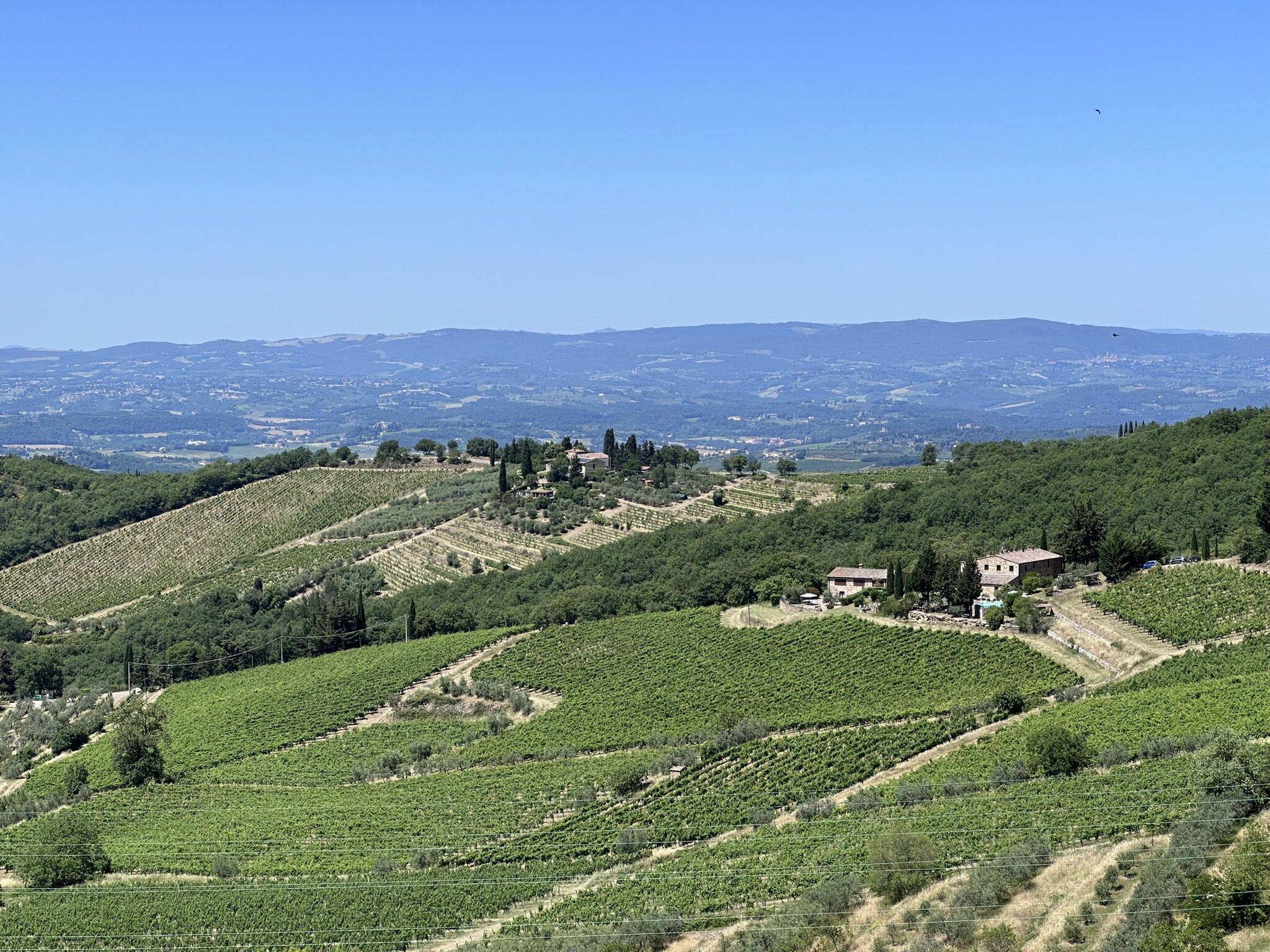
Drive south 9km on the SR222. Panzano sits on a ridge overlooking the Conca d'Oro ("the golden bowl"), one of Tuscany's most photographed valleys — vineyards in concentric terraces, single cypresses on hilltops, farmhouses connected by white gravel roads.
Morning. Fattoria Lamole, 30 minutes' drive up the switchbacks east of Panzano. This is altitude Chianti Classico — 500m+, cooler, with a stonier mineral character than the valley-floor wines. Tasting €25 per person, by appointment, but they don't oversell so a same-week booking usually works.
Lunch. Osteria al 64 in Panzano village, or — for the splurge — the long pergola lunch above Fattoria Lamole that the winery serves on weekends in season. Order whatever pasta the kitchen makes that day.
Afternoon. The hamlet of Volpaia, 25 minutes east. It's a "living castle" — a 12th-century fortified village turned into a single estate, where every house has a different role in winemaking and olive-oil production. Walk the streets, taste at the central enoteca, buy a small bottle of single-estate oil.
Day 3 — Radda and Castellina
Morning. Radda's small farmers' market runs Saturday mornings; the village hosts a permanent enoteca (Casa Chianti Classico) with bottles from every producer in the appellation. Their €30 "five-cellar tasting" sets you up for the week.
Lunch. Drive the SR429 to Castellina (12 minutes). Trattoria La Torre on Piazza del Comune does classic Chiantigiani cooking — pici with cinghiale, ribollita, panna cotta with vin santo. Sit outside if you can.
Afternoon. Fonterutoli for a structured Gran Selezione tasting — €40 per person, by appointment, deeply unflashy. The Marchesi Mazzei family have been making wine here since 1435. You'll taste through Chianti Classico (their daily wine), Riserva, and Castello di Fonterutoli (single-vineyard).
Evening. Return to your agriturismo. A picnic of village-bought cheese, salumi and a bottle of whatever you bought today is more memorable than another restaurant meal.
Days 4 and 5 — Walk and rest
The hardest thing to do well on a wine itinerary is not visit a cellar. Two days here without a structured stop, anchored at an agriturismo between Castellina and Siena, is where the trip earns its slowness.
What to do. Walk a section of the Sentiero della Chiantigiana — the back-road footpath system that runs through the appellation. The 6km loop from Castellina south through the woods to Mulino delle Pile and back takes three hours with stops. Take a packed lunch from your agriturismo kitchen.
What else. Read on a terrace. Swim if your stay has a pool. Drive to nearby San Donato in Poggio for a long lunch at Antica Trattoria La Toppa (no reservations, family-run, perfect). Visit one more cellar only if you actually want to — the discipline of the rest day matters.
Where to sleep. A two-night stay at one agriturismo lets you unpack properly. We like Locanda Casanuova (Castelnuovo Berardenga), Borgo Argenina (Gaiole), or Villa Bordoni (back near Greve).
Day 6 — The Siena approach
From Castelnuovo Berardenga, Siena is 40 minutes' drive north — but take the long way via the SS73 through Vagliagli and Pianella to enter Siena from the north, parking at Fortezza Medicea (€2/hour, free shuttle to the centre). The northern approach gives you the best first view of the city.
Afternoon. Wander to Piazza del Campo. Save the cathedral and the Torre del Mangia for the morning of day 7; in the late afternoon just sit on the Campo's bricks with a gelato and watch the light change.
Evening. Eat where the Sienese eat — Osteria Le Logge for the splurge (book three days ahead) or Trattoria La Taverna del Capitano for the classic version at half the price. Order pici with sugo aglione, a glass of Vino Nobile, and a wedge of pecorino di Pienza with chestnut honey.
Sleep. One night inside the walls. See the Siena region pillar for specific recommendations on where to stay in town.
Day 7 — One last cellar
Morning. Siena Cathedral, Pulpit, Piccolomini Library. Book the OPA Si pass online the night before. Skip the Torre del Mangia climb unless you really need a viewpoint.
Lunch. Light. Bar Pasticceria Nannini on Banchi di Sopra for ricciarelli (almond biscuits, a Sienese invention) and a coffee.
Afternoon. Drive south to Castelnuovo Berardenga and pick one final cellar — Castell'in Villa for traditional Sangiovese, or Felsina for the modernist approach. Either is a 25-minute drive from Siena.
The drive back. Return to Florence airport via the SR222 — the same Chiantigiana you started on, in reverse. It takes 1h 45 with no stops. Plan for 30 minutes longer if you want one last photo from the lay-by above Castellina.
Costs and bookings
Total for two, six nights' double occupancy + car + meals + tastings: €1,800–€2,600 depending on agriturismo standard.
Hire car. €45–€80/day in shoulder season. Book direct with the rental company (avoid third-party aggregators that bury fees). Take the full insurance — Chianti's white gravel tracks chip windshields.
Cellar bookings. Every cellar mentioned here takes online reservations 5–10 days ahead in season. Lamole, Fonterutoli and Felsina specifically require advance booking.
Agriturismo bookings. Six weeks ahead in May/September, two weeks in April/October, same-week in November.
Read next. Our practical-basics guide covers wider Italy logistics. The Siena region pillar goes deeper on the city. For the Val d'Orcia south of Siena, see our Pienza and Val d'Orcia guide and our photography guide. The wider food and wine pillar covers the DOCG landscape across the rest of Tuscany.
Frequently asked.
- Do I need a car for a Chianti itinerary?
- Yes — Chianti's cellars and back-roads aren't realistically reachable by public transport. The bus network covers main villages (Greve, Panzano, Castellina, Radda) but not the wineries, which sit on white-gravel tracks between them. A small car is essential; a 4WD is overkill.
- How many days do I need in Chianti?
- Minimum three nights to make the driving worth it. Five nights to taste at three cellars properly and walk between days. Seven nights — our recommended itinerary — adds two anchored rest days, which is what makes the trip feel like Chianti rather than a wine tour.
- When is the best time to visit Chianti?
- Late April through May, or mid-September through mid-October. May is greener; September is harvest. Avoid mid-July through mid-August (heat, closed family producers) and December–February (cold, many cellars closed for the season).
- Do Chianti cellars accept walk-ins?
- Bigger commercial cellars do (Verrazzano, Felsina). Smaller family producers — including the three we recommend (Lamole, Fonterutoli, Volpaia) — require advance booking, typically 5–10 days ahead in season. Email is preferred over phone.
Keep reading.
Hiking the Apuan Alps above Carrara
Marble mountains, chestnut woods, refuges serving polenta. A three-day traverse, and how to do it.
Pienza and the Val d'Orcia, a guide
The Renaissance-pope's experiment in town planning, and the photogenic countryside around it.
San Gimignano — the towers, demystified
Medieval Manhattan, day-trip or overnight, where to eat without the tourist menus.