 ← All regions
 Pisa
Far more than a leaning tower — a river city with a proud maritime past and a lively student pulse.
What to see.
Piazza dei Miracoli
Highlight · Pisa
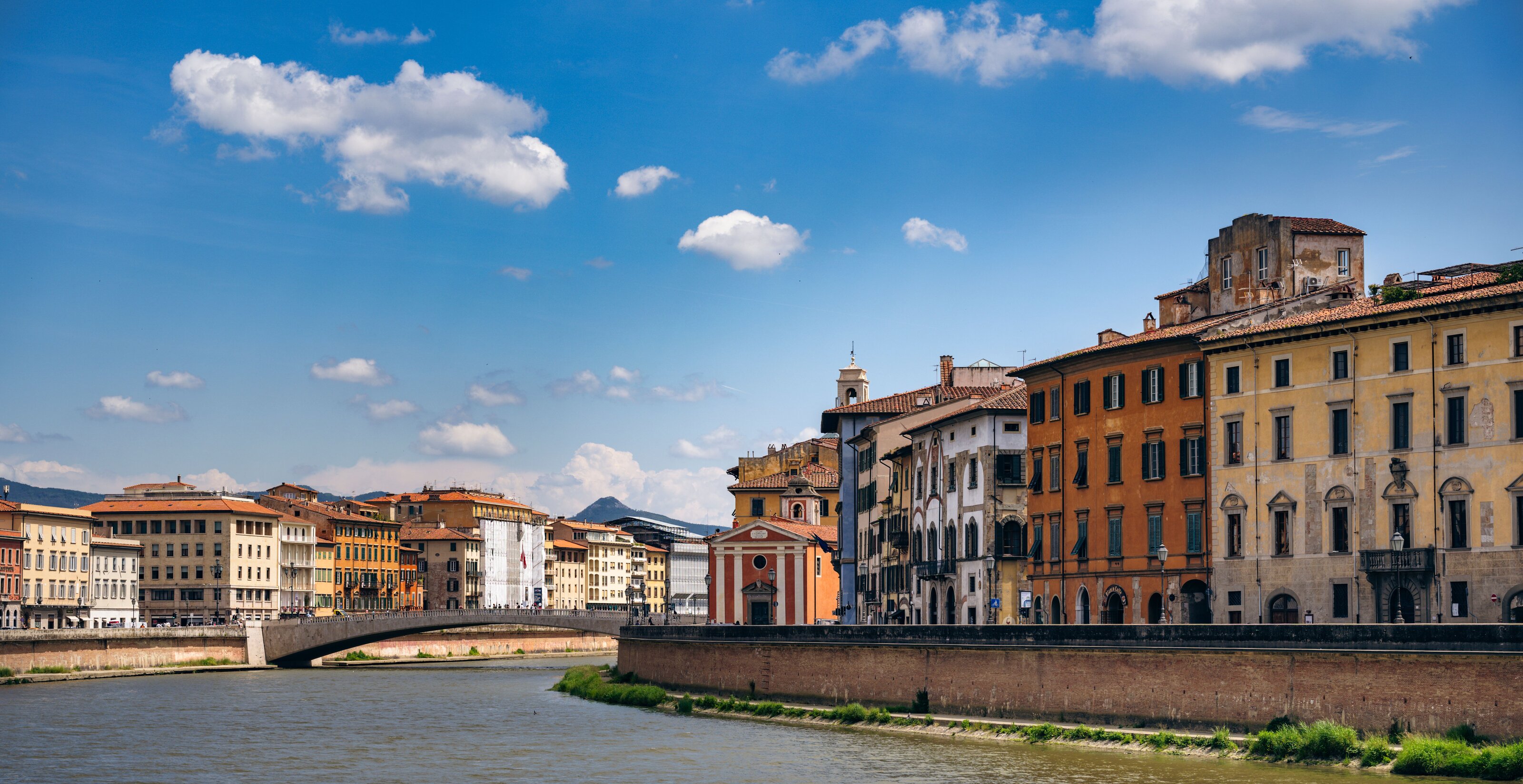
Lungarni walks
Highlight · Pisa
Tuttomondo mural by Keith Haring
Highlight · Pisa
San Rossore park
Highlight · Pisa
About Pisa
A short history
Pisa was one of the four medieval Italian maritime republics — alongside Venice, Genoa and Amalfi — and for two centuries (roughly 1050–1284) one of the dominant Mediterranean naval powers. The wealth from that trade paid for the buildings on the Piazza dei Miracoli: cathedral, baptistery, bell tower (the leaning one) and the monumental cemetery. They went up between 1063 and 1372, and that single ensemble is the reason most travellers come.
Then Pisa lost a sea battle (Meloria, 1284), lost Sardinia, lost Corsica, and was annexed by Florence in 1406. From that point on it was a regional university town — the Università di Pisa is one of Europe's oldest, founded 1343 — which is why the city still feels like an unhurried student town with a single spectacular monument rather than a tourist trap.
The university and the Scuola Normale Superiore (founded by Napoleon in 1810) give the city its modern character: 50,000 students, cheap aperitivo, evening passeggiata along the Arno, a bookshop on every other corner.
Where to base
Pisa is small and walkable. The two useful areas:
Centro Storico / Borgo Stretto. The medieval streets between the Arno and the Piazza dei Miracoli. Mid-priced (€110–€180), close to the train station, easy walk to the tower in 20 minutes. Best for a single overnight.
Lungarno (along the river). Both banks of the Arno are atmospheric in the evening — Lungarno Mediceo on the north and Lungarno Galilei on the south. The Royal Victoria has been a hotel since 1837; Ruskin and Dickens both stayed there.
Outside the centre. Stay near San Rossore park if you want to combine the city with cycling or beach access. Marina di Pisa, the city's seaside outpost (10km), is a good base in summer for a Pisa-plus-coast week.
Many travellers do Pisa as a day trip from Lucca, Florence or even Cinque Terre. That's reasonable; one night unlocks the evening Lungarno passeggiata, which is when the city is most itself.
What to see
Piazza dei Miracoli. The famous quartet: cathedral (free, gorgeous striped marble interior), bell tower (the leaning one — climb requires advance booking, €20, kids 8+), baptistery (the largest in Italy — listen for the acoustic demonstration the staff give every 30 minutes), and the Camposanto monumental cemetery (frescoes that survived WWII bomb damage). See our Leaning Tower and Piazza dei Miracoli guide for why the tower leans, how the engineers stopped it falling, and the three monuments most day-trippers skip.
Tuttomondo mural. Keith Haring painted his last public mural here in 1989, a year before his death — 30 figures, 180 square metres, on the south wall of Sant'Antonio Abate church. Free, often missed by day-trippers.
Piazza dei Cavalieri. Vasari rebuilt this square as the headquarters of the Knights of St Stephen in the 1560s. The Palazzo della Carovana facade is one of Vasari's best works and now houses the Scuola Normale Superiore.
San Rossore park. 4,800 hectares of pine forest, dunes and marshland running from the city to the coast. Cycling routes, deer spotting at dawn. Free, year-round.
Lungarni at sunset. The 1.5km walk from Piazza Garibaldi to the Cittadella along the north bank takes 25 minutes; do it between 6pm and 7pm in summer and the Arno catches the pink light. La Pietrasanta and the Cantine di Marco are good aperitivo stops.
What to skip
The forced-perspective tower photos. Have your laugh, take one if you must, then walk on. The whole grassy esplanade in front of the tower is performance art every afternoon.
The leather and souvenir stalls. Every other booth between the station and the tower sells the same Made-in-Pisa-fridge-magnets. Skip them all; buy nothing on this strip.
Day-trip itinerary that gives Pisa under two hours. If you came on the train, you have time for the tower, the cathedral, lunch and the Tuttomondo mural. Anything shorter and you spent more time in transit than in the city.
Best time to visit
April–early June. Warm, green, the piazza grass at its best. Easter-week and Italian school-trip season (mid-March through late May) brings school groups, but they're gone by 4pm.
Mid-September through October. Quietest months that are still warm. Student term starts in October — the city gets its evening life back.
June 16–17. Luminara di San Ranieri. The city honours its patron saint by lining the entire length of the Arno with 70,000 candles in painted wooden frames. Followed by a fireworks display over the river. One of Tuscany's best festivals; book accommodation three months ahead.
July–August. Hot, busy, the tower queue stretches a long way. Many shops close for ferie in mid-August. Avoid unless you're combining with Marina di Pisa or the coast.
Winter. Mild for Tuscany (rarely below 5°C), often clear, museum and tower bookable on the day. The Camposanto is at its most atmospheric in early-winter light.
Getting there
By air. Pisa's Galileo Galilei airport (PSA) is the main budget hub for Tuscany — Ryanair, easyJet and Wizz fly into it from across Europe. The PisaMover automated train runs from terminal to Pisa Centrale station in 5 minutes (€5).
By train. Florence Santa Maria Novella → Pisa Centrale is 55 minutes regional, 45 fast. Lucca → Pisa is 30 minutes (worth combining on one ticket). La Spezia (for Cinque Terre) is 60 minutes north.
By car. The A11 from Florence is straightforward (1h 15). Don't drive into the centre; park at Via Pietrasantina (large lot, €2 hourly, free shuttle to the tower) or at the station for longer stays.
Day trips from Pisa
Lucca — 30 minutes by train. The walled city is a complete contrast to Pisa: no single monument but a beautifully preserved town. Pair them on a single day if pressed.
San Miniato — the truffle town between Pisa and Florence. November to early December is peak white-truffle season; see our San Miniato truffle guide.
Marina di Pisa & Tirrenia — the city's seaside. Bus 010 from Pisa Centrale, 30 minutes. Long pebble beaches, beach clubs, fish lunches at trattoria standards. The wider Livorno coast opens up 20 minutes south.
Cinque Terre — 60 minutes by train to La Spezia, then the Cinque Terre line. Long day but feasible.
Volterra — 1h 30 by bus, alabaster workshops and Etruscan tombs. Lighter on tour groups than San Gimignano.
Practicalities
Tower tickets. Book online at OPA Pisa, 20+ days ahead in season. The ticket is timed; you climb 296 steps in a single 30-minute slot. Children under 8 are not allowed. The combined OPA Pisa pass adds the cathedral + baptistery + Camposanto for €27.
Eat. Cecìna (chickpea-flour flatbread, a Pisan speciality), bordatino (chickpea-and-cabbage soup), torta co' bischeri (sweet chocolate-and-rice pie). Avoid the strip between the station and the tower; head to Piazza delle Vettovaglie or Borgo Stretto.
Bicycles. Pisa is flat and bike-friendly. Several rental shops near the station do half-day rates. Connect San Rossore Park, the city centre and Marina di Pisa on a single 25km loop.
Read first. Our practical-basics guide covers transport, timing and money.
Read our practical basics before you book — when to come, where to base, how to get around.
Stories from Pisa.
Truffle season in San Miniato
November in a hill town that smells like the forest floor — where to eat, and what to buy.
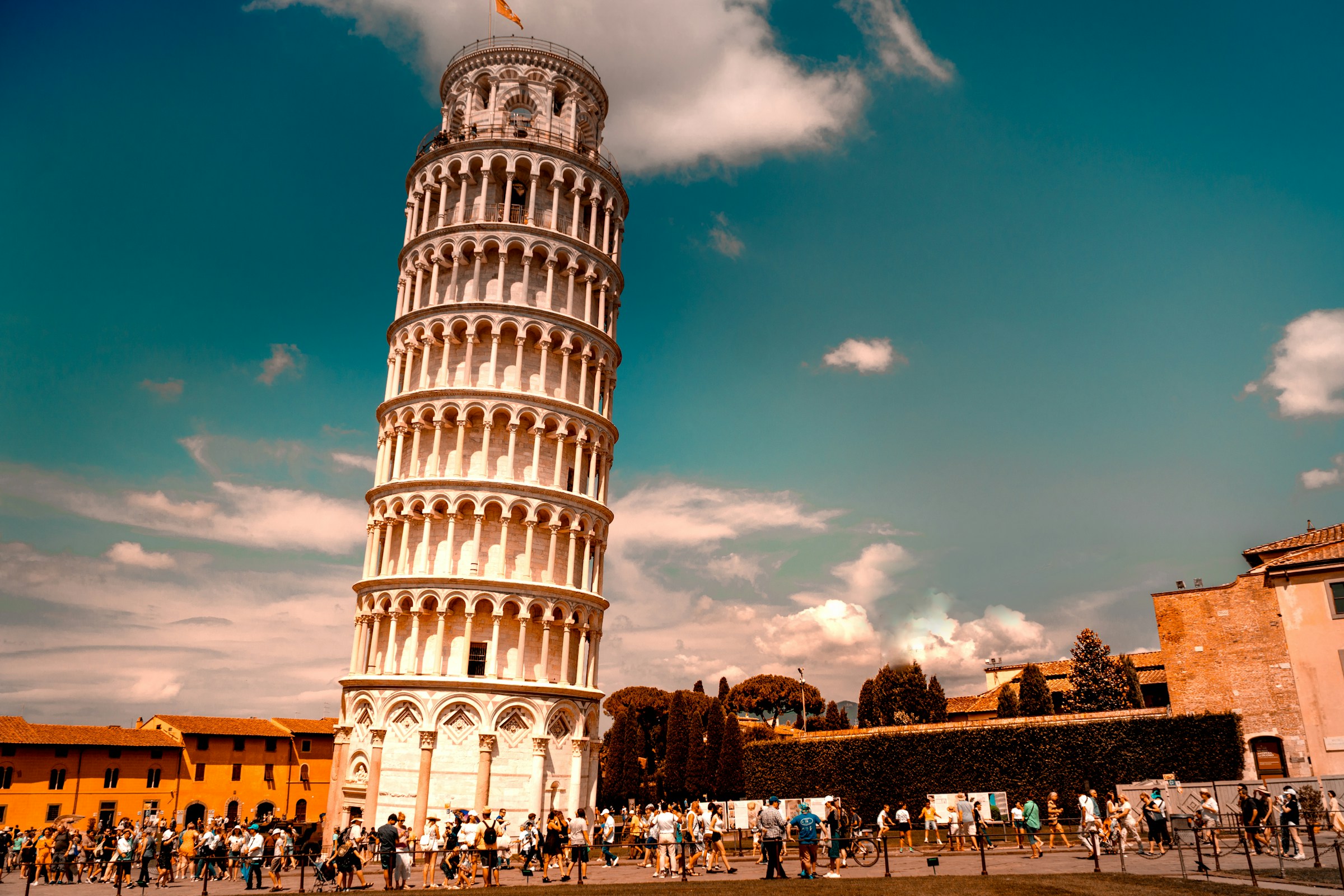
The Leaning Tower of Pisa, explained — and what else to see
Why the tower leans, how the engineers stopped it falling, and the four other monuments on the Piazza dei Miracoli most day-trippers never enter.