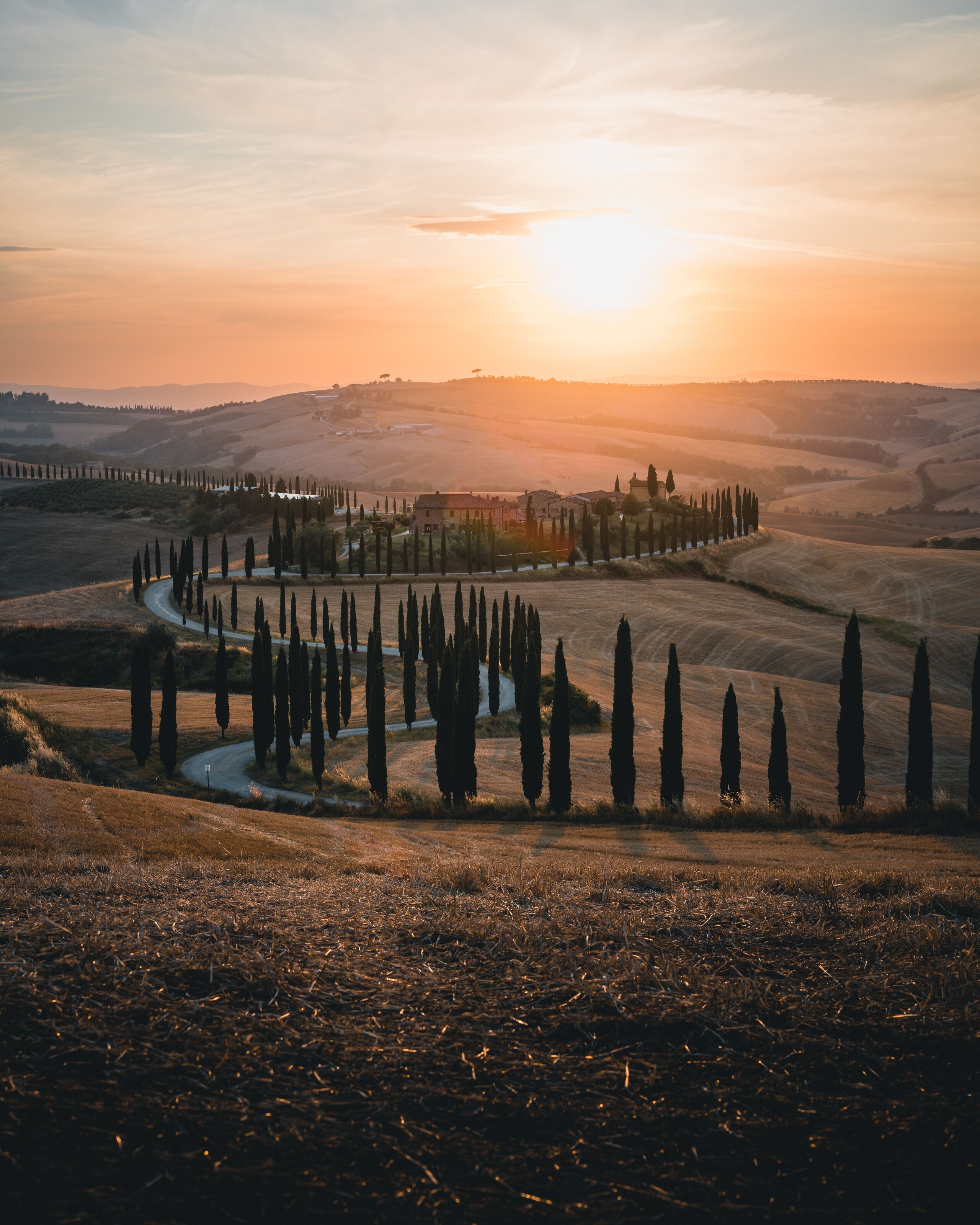
 ← All stories
 Pienza and the Val d'Orcia, a guide
The Renaissance-pope's experiment in town planning, and the photogenic countryside around it.
The Renaissance-pope's experiment in town planning, and the photogenic countryside around it.
Why Pienza is unique
Pienza was, until 1459, a village called Corsignano. That year its most famous son — Aeneas Sylvius Piccolomini — was elected Pope Pius II. Within months he commissioned the architect Bernardo Rossellino to remake his birthplace as a planned Renaissance town: a single central piazza framed by a cathedral, a papal palace, a town hall, and a bishop's palace, all built simultaneously to a unified design. Pius died four years later but the core was finished.
What you see today is essentially that 1462 ensemble: Piazza Pio II, four buildings, a single coherent piece of Renaissance urbanism. UNESCO listed the historic centre and the surrounding Val d'Orcia as World Heritage in 1996 and 2004 respectively. It is one of the only places in Europe where you can walk into a piazza and see Renaissance ideals of proportion and harmony realised at full scale.
The town is tiny. The historic centre fits within a single 15-minute walk; total population around 2,000. You will not get lost. You will queue at the cathedral in midday peak. You will want to eat pecorino.
What to see in Pienza itself
Piazza Pio II. Start here. The Duomo is the first building of the Italian Renaissance to use the Latin cross plan with no transepts — interior light is the headline, designed to be a 'church of light' (the pope's words). The Palazzo Piccolomini is open as a museum; the papal apartments and the hanging garden on the back facade overlooking the Val d'Orcia are the highlight. Entry €7, allow 45 minutes.
Corso Rossellino. Pienza's single main street, named for the architect. Lined with pecorino shops, wine bars, and a few tourist tat outlets. Walk it once each direction; the views off the side streets to the south are the photogenic ones.
The ramparts on the south side. Walk Via dell'Amore, Via del Bacio and Via della Fortuna along Pienza's southern wall — three named lanes facing the open Val d'Orcia. The view at golden hour from Via dell'Amore is the iconic Pienza viewpoint.
Sant'Anna in Camprena. 5km east. Quattrocento monastery with Sodoma frescoes, used as the location for the monastery scenes in The English Patient (1996). Visit by appointment.
Pecorino — the right kind
Pienza is the world capital of pecorino di fossa and pecorino stagionato. The hills around the town support a particular cocktail of grasses, herbs and clover that the sheep eat; the milk reflects this. The two best types to try:
Pecorino di Pienza stagionato. Aged 4–6 months minimum, sometimes longer. Hard, salty, complex. Wrapped in vine leaves or oat husks during ageing for additional flavour. €25–€40 per kilo.
Pecorino di fossa. Aged in a pit (fossa) — traditionally in tufa caves — for 90 days, generating a deeper, more mushroomy flavour. €40–€60 per kilo. The Cugusi family and Cugusi-Lapardini are the canonical producers; both have shops on Corso Rossellino.
Eat it with: a Vino Nobile di Montepulciano or a Brunello; or for a country lunch, with miele di castagno (chestnut honey) and walnuts. Avoid serving with anything sweet beyond honey — the pecorino does the heavy lifting.
Where to base — Pienza or Val d'Orcia
Base in Pienza itself if you want to walk to dinner. Two good options: La Bandita Townhouse (smart 12-room boutique, €280–€450 in season) and La Saracina (5-room agriturismo within walking distance, €180–€260).
Base at a Val d'Orcia agriturismo if you want the views and a pool. Top choice: Agriturismo Cretaiole near Pienza (working farm, run by the same family for centuries, €120–€200). For a higher-end take, the Castello di Velona — a 14th-century castle conversion outside Montalcino (€450–€800) — has the best swimming pool in the valley.
Base in Montalcino if Brunello is the trip's centre. Montalcino is 25 minutes from Pienza and lets you walk to cellars. Hotel Il Giglio is the long-standing town-centre option (€130–€200).
Base in Montepulciano if Vino Nobile is the priority. The town is more compact and arguably prettier than Montalcino. La Locanda di San Francesco (€200–€280) is in the historic centre.
The Val d'Orcia day-trip loop
A full day driving from a Pienza base, covering the iconic photo stops, two cellars, and three more hill towns. Best done on a weekday in May, June or September.
Dawn — Cappella della Madonna di Vitaleta. 4km west of Pienza. The tiny chapel on the cypress-flanked road, one of the most photographed buildings in Tuscany. Park at the gravel pull-off on the SP146 (43.0769° N, 11.6451° E); 10-minute walk to the chapel. Best at first light.
Mid-morning — Montichiello, Sant'Anna in Camprena. Both within 10 minutes of Pienza. Montichiello is a perfectly preserved walled village with a single restaurant (La Porta — book) and one souvenir shop. Sant'Anna is the Sodoma-frescoed monastery.
Late morning — Montalcino + a Brunello cellar. Drive 25 minutes south to Montalcino, walk the centre, visit one cellar. We recommend Salvioni (small, family-run, €40 tasting) or Le Ragnaie (slightly larger, biodynamic, €30). Both require a 1-week-ahead phone booking.
Lunch — Sant'Antimo Abbey area. The 12th-century Romanesque abbey 10km south of Montalcino is one of Tuscany's most beautiful religious buildings. Lunch at the nearby Trattoria di Sant'Antimo.
Afternoon — Bagno Vignoni. Drive 20 minutes east. The hamlet built around a single thermal spring pool. Walk the village (20 minutes), have a thermal-water soak at the free lower pools or pay €20 at Hotel Posta Marcucci.
Late afternoon — Montepulciano. Drive 25 minutes east. The renaissance town built on a tufa ridge, with the Piazza Grande at the top. One Vino Nobile cellar visit (Avignonesi is the big name; Boscarelli is the small).
Dinner — back to Pienza. Latte di Luna for traditional Tuscan, or Sette di Vino for a modern take.
Where to eat
Latte di Luna (Pienza, Via S. Carlo). Maremma-style cooking, indoor + outdoor seating, the suckling pig is a signature. €40–€55 per person. Book ahead.
Sette di Vino (Pienza, Piazza di Spagna). Tiny 6-table place, walk-in only, run by a single chef. €35–€45 per person. Go early.
La Porta (Monticchiello, Via del Piano). The single restaurant in a walled hilltop village 10 minutes from Pienza. Truffle pasta in season, panoramic terrace. €45–€65 per person. Book a week ahead.
Trattoria di Sant'Antimo (Castelnuovo dell'Abate). Lunch stop near the abbey. Pici al cinghiale; bistecca for two. €30–€45 per person.
Osteria Acquacheta (Montepulciano, Via del Teatro). The bistecca specialist of east Tuscany. €40–€55 per person.
When to come
May–early June. The classic Val d'Orcia photo season. Green hills, golden light, no heat. Bookings tight on weekends. Our pick.
Late June–August. The fields turn from green to golden — a different but equally photogenic palette. Hot in the middle of the day (32–35°C) but mornings and evenings are perfect.
September–October. Vendemmia (grape harvest) in Montalcino + Montepulciano. Many cellars let visitors join the harvest. Earlier in October the colours are still warm; later the Val d'Orcia hills turn brown and the light becomes thinner.
November–March. Pienza shuts down significantly — half the restaurants close. The countryside is empty, the views still good. Cold (3–10°C). Worth it if you want solitude.
Read on
Our Siena and the Crete Senesi region pillar covers the wider area. The Val d'Orcia photography guide gives the precise GPS coordinates for the iconic shots. For thermal pools nearby see our Saturnia and Bagni San Filippo guide.
Frequently asked.
- How long do I need in Pienza?
- Half a day for the town itself — the historic centre is small and walkable in two hours, with another hour for the Piccolomini palace. Base for 2–3 nights to do the Val d'Orcia day-loop and visit Montalcino and Montepulciano.
- What is Pienza famous for?
- Two things: Renaissance town planning (Pope Pius II remade the village around a single planned piazza in the 1460s — now a UNESCO World Heritage site), and pecorino cheese (the hills around the town support a particular grass mix that makes the sheep's milk unusually flavourful).
- What is the best month for the Val d'Orcia?
- May–early June for green hills and wildflowers; July–August for the iconic golden fields; September for vendemmia (grape harvest). November–March is empty but cold and many restaurants close.
- Should I stay in Pienza or Montalcino?
- Pienza if pecorino + Val d'Orcia photography is the priority. Montalcino if Brunello tasting is the priority. The two are 25 minutes apart; either works as a base for a 3-day visit.
- How do I get to Pienza without a car?
- It's difficult. The nearest train station is Chiusi-Chianciano (40 minutes by infrequent bus to Pienza). Most visitors hire a car in Siena or Florence. For a no-car alternative, base in Siena and book a day-trip with a driver-guide — €350–€500 for a full day covering Pienza + Montalcino + Montepulciano.
Keep reading.
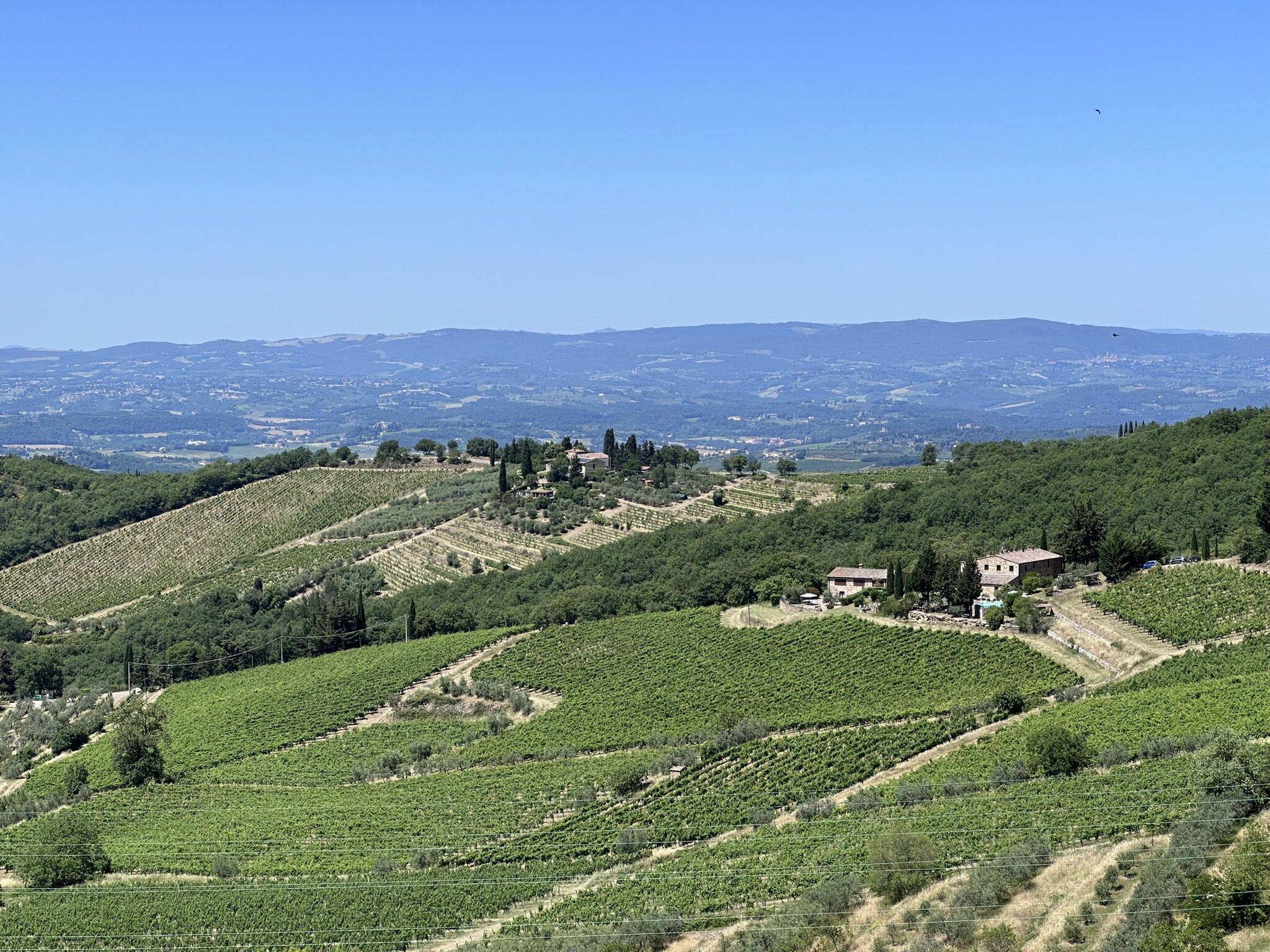
Seven slow days across Chianti
A practical itinerary between Florence and Siena — with three cellars worth the detour.
Hiking the Apuan Alps above Carrara
Marble mountains, chestnut woods, refuges serving polenta. A three-day traverse, and how to do it.
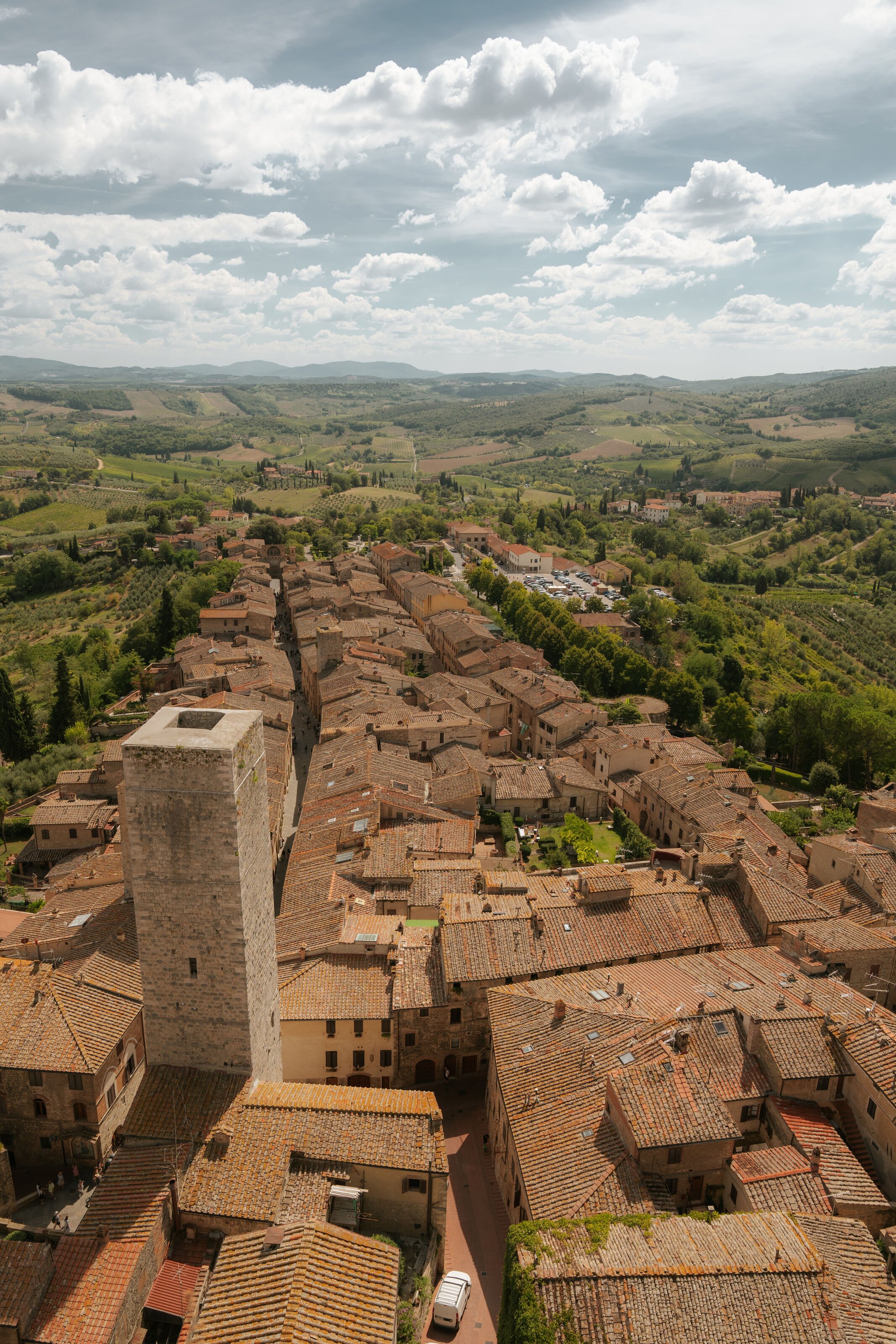
San Gimignano — the towers, demystified
Medieval Manhattan, day-trip or overnight, where to eat without the tourist menus.