 ← All stories
 San Gimignano — the towers, demystified
Medieval Manhattan, day-trip or overnight, where to eat without the tourist menus.
Medieval Manhattan, day-trip or overnight, where to eat without the tourist menus.
Why San Gimignano has so many towers
San Gimignano became wealthy in the 13th and 14th centuries from two things: the saffron trade (the Crocus sativus growing on the hills around the town was sought across Europe) and the pilgrim route. The Via Francigena, the medieval pilgrim road from Canterbury to Rome, passed straight through. The town's merchants got rich.
Status competition went vertical. Two rival families (Ardinghelli and Salvucci) and their alliances built ever-taller towers to demonstrate wealth, hold meetings, and physically defend themselves during the Guelph-vs-Ghibelline factional violence. At the peak there were 72. Most were demolished after the Black Death (1348) emptied the town and the surviving families consolidated power.
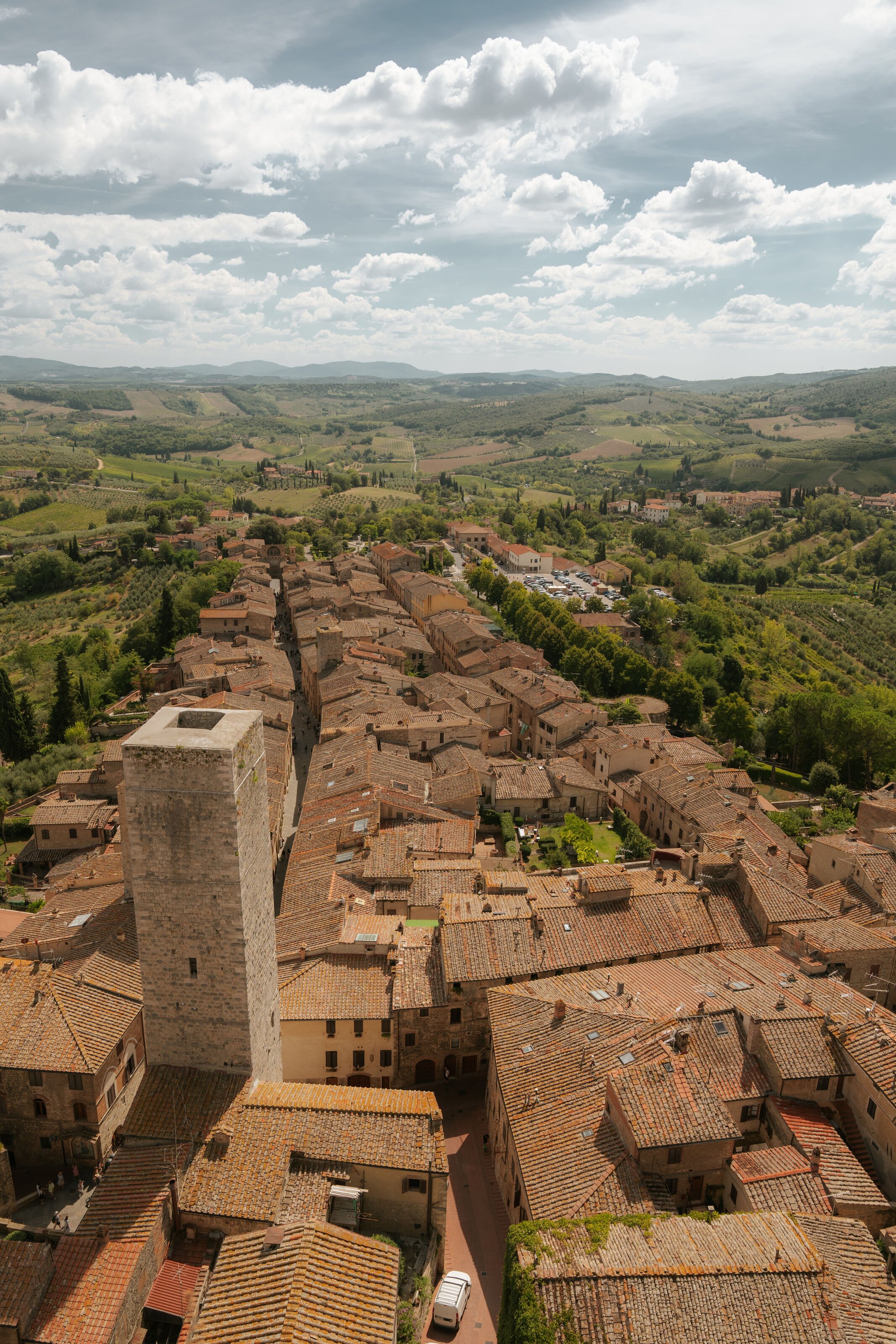
Today 14 towers remain — a fraction of the original count but more than any other medieval Italian town. The skyline is the reason San Gimignano is UNESCO-listed (since 1990).
When to visit
Avoid 10:00–17:00 in peak season (May–October). Tour-bus crowds make the main piazze unwalkable. The town is one of the top three day-trip destinations in central Italy; it gets industrial-scale traffic.
The sweet windows: 8:00–10:00 and 17:00–22:00. Tour buses arrive at 10:30 and leave by 17:00. Outside that window the town is genuinely calm. Sunset from the Rocca (a small hilltop park inside the walls) is the best 30 minutes of any San Gimignano day.
Best strategy: overnight. Most visitors do San Gimignano as a 3-hour day-trip stop between Florence and Siena. The town transforms after the day-trippers leave — empty piazze, quiet restaurants, the medieval atmosphere the photos imply. Two nights is enough; one night still works.
Worst month: August. Hot, packed, every restaurant overworked.
Best months: March–May, late September–November. Comfortable temperatures, manageable crowds, autumn light + chestnuts in season.
What to see — a half-day plan
Walk up Via San Giovanni from the south gate. The main entrance for day visitors. The street climbs gently up to Piazza della Cisterna; allow 15 minutes with stops.
Piazza della Cisterna. Triangular piazza with a 13th-century well in the centre. Look up — five surviving towers from the rival families. Sit on the steps; this is the most photographed spot in town.
Piazza del Duomo. Adjacent to Piazza della Cisterna. The Collegiate church (the Duomo) has the better fresco interior in town — Ghirlandaio's Last Supper, Taddeo di Bartolo's Last Judgement, scenes from Genesis. €5 entry, allow 30 minutes.
Torre Grossa. 54m — the tallest of the surviving towers, and the only one open to climb. The view from the top covers the Chianti hills, the Val d'Elsa, Monteriggioni's wall in the middle distance. €9 entry (combined with the Musei Civici), allow 30 minutes including the climb.
Rocca di Montestaffoli. Small hilltop park at the highest point of the town. Free, open daily. The best sunset view in San Gimignano; arrive 45 minutes before sunset for a seat on the grass.
The Vernaccia museum (Museo del Vino). Inside the Rocca. Small, free, useful primer on the white wine the town produces. 20 minutes.
Sant'Agostino. Less-visited church on the north side of town. Benozzo Gozzoli's fresco cycle on the life of Saint Augustine is the highlight. Free, allow 30 minutes.
Vernaccia di San Gimignano
Tuscany's only DOCG white wine, made exclusively from Vernaccia grapes grown on the hills immediately around San Gimignano. The town's other claim to fame after the towers. Crisp, mineral, dry. It pairs particularly well with the cinghiale (wild boar) dishes that dominate San Gimignano's restaurant menus. (See the food and wine pillar for the wider Tuscan DOCG landscape.)
Where to taste. The Museo del Vino inside the Rocca has a small free pour at the bar. For a proper tasting, visit a cellar — Tenuta Torciano (10 minutes outside town, €25 tasting of 5 wines) or Fattoria Poggio Alloro (working farm + cellar, €35 with snacks). Both need 1-week-ahead bookings.
Where to buy. Enoteca Gustavo on Via San Matteo has the best in-town selection; €15–€30 per bottle for everyday Vernaccia, €40+ for the riserva category.
Where to eat
San Gimignano has more bad tourist restaurants per capita than any other Tuscan town. Avoid anywhere with English-only menus, photos of the dishes, or staff calling out from the doorway. Five reliable choices:
Cum Quibus (Via S. Martino). The town's only Michelin-star restaurant — modern Tuscan, 8 tables, set menu only. €85–€120 per person. Book a month ahead.
Osteria del Carcere (Via del Castello). Cheese-and-salumi specialist tucked into an old prison building. €40–€55 per person, lots of pecorino + ham boards.
Locanda Sant'Agostino (Piazza Sant'Agostino). Outdoor tables on the quiet northern piazza. Pasta-focused menu. €40–€55 per person.
La Mandragola (Via Berignano). Off the tourist path, family-run. Pici cacio e pepe is the dish to order. €35–€50 per person.
Trattoria Chiribiri (Piazza della Madonna). Tiny, walk-in only, traditional Tuscan. Lunch only most days. €25–€35 per person.
For gelato: Gelateria Dondoli on Piazza della Cisterna — the most awarded gelateria in Italy. The crema di Santa Fina and the Vernaccia sorbet are the signatures.
Where to stay if you're overnighting
Three good options inside the walls and a couple in the immediate countryside:
La Cisterna (Piazza della Cisterna). 47-room three-star directly on the main piazza. Tower views from the top floors. €110–€180 in season. Stayed-here-many-times steady.
Antico Pozzo (Via S. Matteo). 18-room boutique in a 15th-century palazzo. Good breakfast. €150–€240.
Pescille (1km outside town). Converted farmhouse with pool. View of the towers from the garden. €130–€200.
Country base nearby: Borgo Casabianca in the Chianti hills, 25 minutes east. Pool, garden, a base for both San Gimignano and Chianti cellar trips. €180–€280.
How to get there
San Gimignano has no train station. The two reasonable approaches:
By car. From Florence: 1h15 via the SR2 + SP1. From Siena: 50 minutes via the SR68. Park at Parcheggio Montemaggio (P1) on the south side; €2 per hour, then a 5-minute walk up to the south gate. Don't try to drive into the historic centre — it's a ZTL.
By bus. From Florence: Tiemme bus from Piazza Stazione (next to SMN), change at Poggibonsi, total 1h45. From Siena: Tiemme bus, change at Poggibonsi, total 1h15. Tickets €8–€12, bookable on the Tiemme app.
Tour combinations. Many day-trips from Florence combine San Gimignano + Siena + a Chianti wine tasting into one 8-hour day. These are convenient but mean only 90 minutes in San Gimignano — not enough to see anything beyond the main piazza.
Read on
Our Siena and the Crete Senesi region pillar covers the wider area. The Pienza guide is the natural pairing — three days San Gimignano + Volterra in the north, three days Pienza + Val d'Orcia in the south.
Frequently asked.
- How many towers are left in San Gimignano?
- 14 of the original 72. The town's wealth peaked in the 13th and 14th centuries from the saffron trade and the pilgrim route — rival families built ever-taller stone towers to display status. The Black Death (1348) emptied the town; most towers were demolished as the surviving families consolidated.
- Can I climb a tower in San Gimignano?
- Yes — the Torre Grossa (54m, the tallest of the surviving towers) is the only one open to the public. €9 entry combined with the Musei Civici. Allow 30 minutes for the climb and the view.
- Is San Gimignano worth visiting?
- Yes — but ideally not as a 3-hour day-trip in midday peak. Overnight or arrive after 17:00 or before 10:00. The town's medieval atmosphere is much more present once the tour buses leave; the sunset view from the Rocca is one of the best in central Italy.
- What's San Gimignano famous for besides the towers?
- Vernaccia di San Gimignano (Tuscany's only DOCG white wine, made from a grape grown only on these hills), Gelateria Dondoli (the most awarded gelateria in Italy), and the saffron crop that built the medieval town's wealth (still cultivated in small quantities on the surrounding hills).
- Where should I park in San Gimignano?
- Parcheggio Montemaggio (P1) on the south side of town. €2 per hour, 5-minute walk up to the south gate (Porta San Giovanni). Don't try to drive inside the walls — it's a ZTL (limited-traffic zone) with €100+ fines for unauthorised entry.
Keep reading.
Seven slow days across Chianti
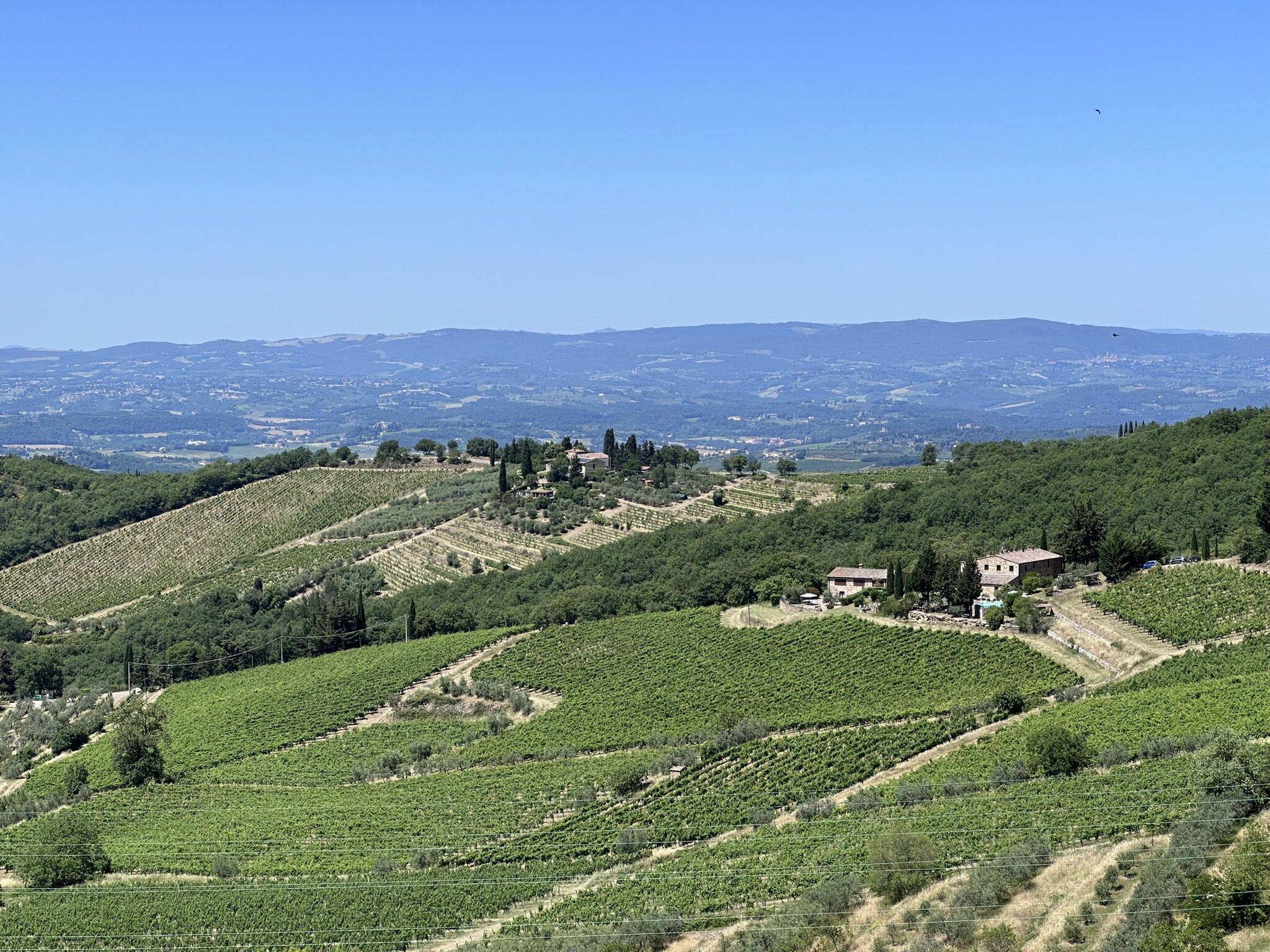
A practical itinerary between Florence and Siena — with three cellars worth the detour.
Hiking the Apuan Alps above Carrara
Marble mountains, chestnut woods, refuges serving polenta. A three-day traverse, and how to do it.
Pienza and the Val d'Orcia, a guide
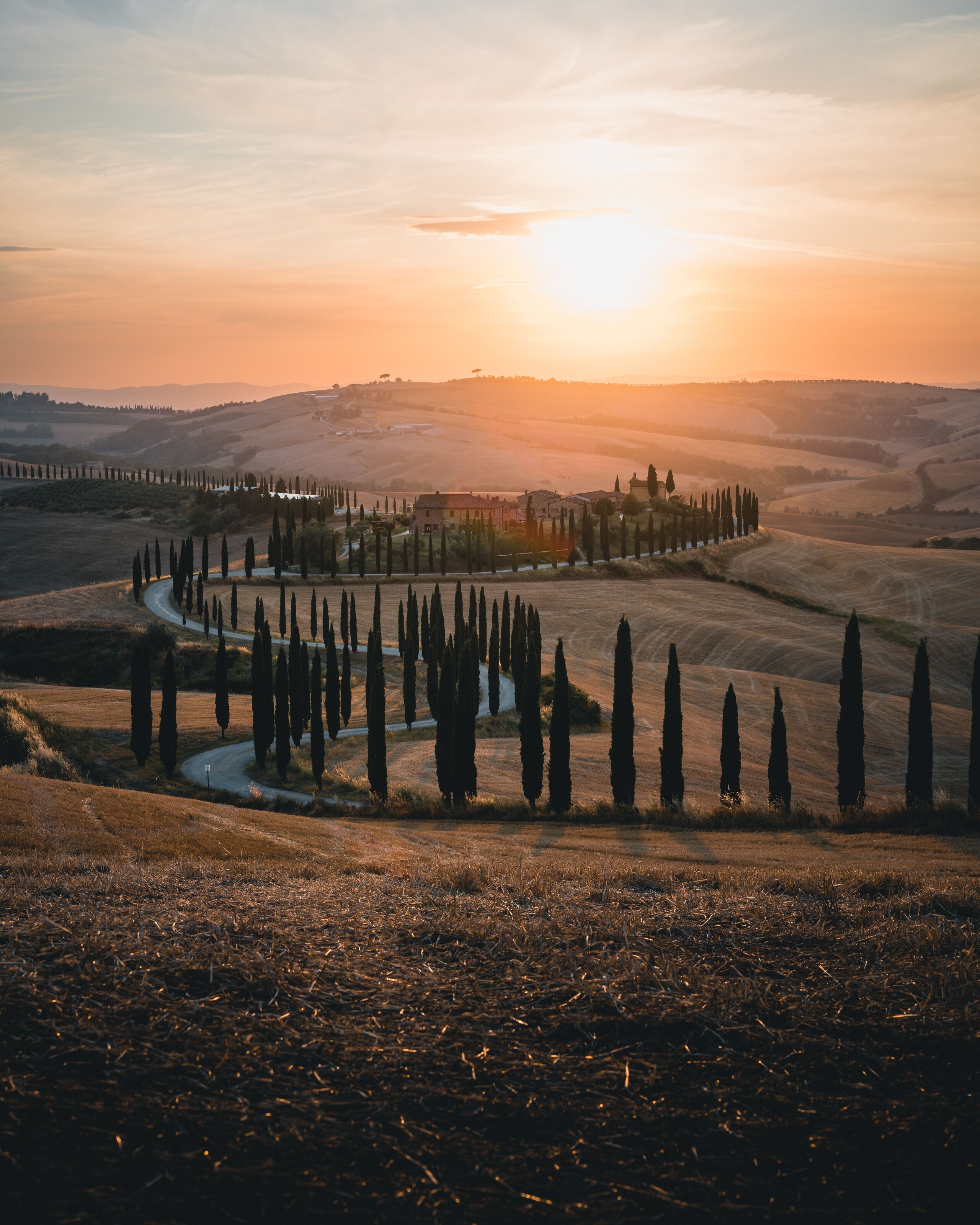
The Renaissance-pope's experiment in town planning, and the photogenic countryside around it.