 ← All regions
 Grosseto
The Maremma: butteri cowboys, hot springs, Etruscan tombs and empty white-sand beaches.
What to see.
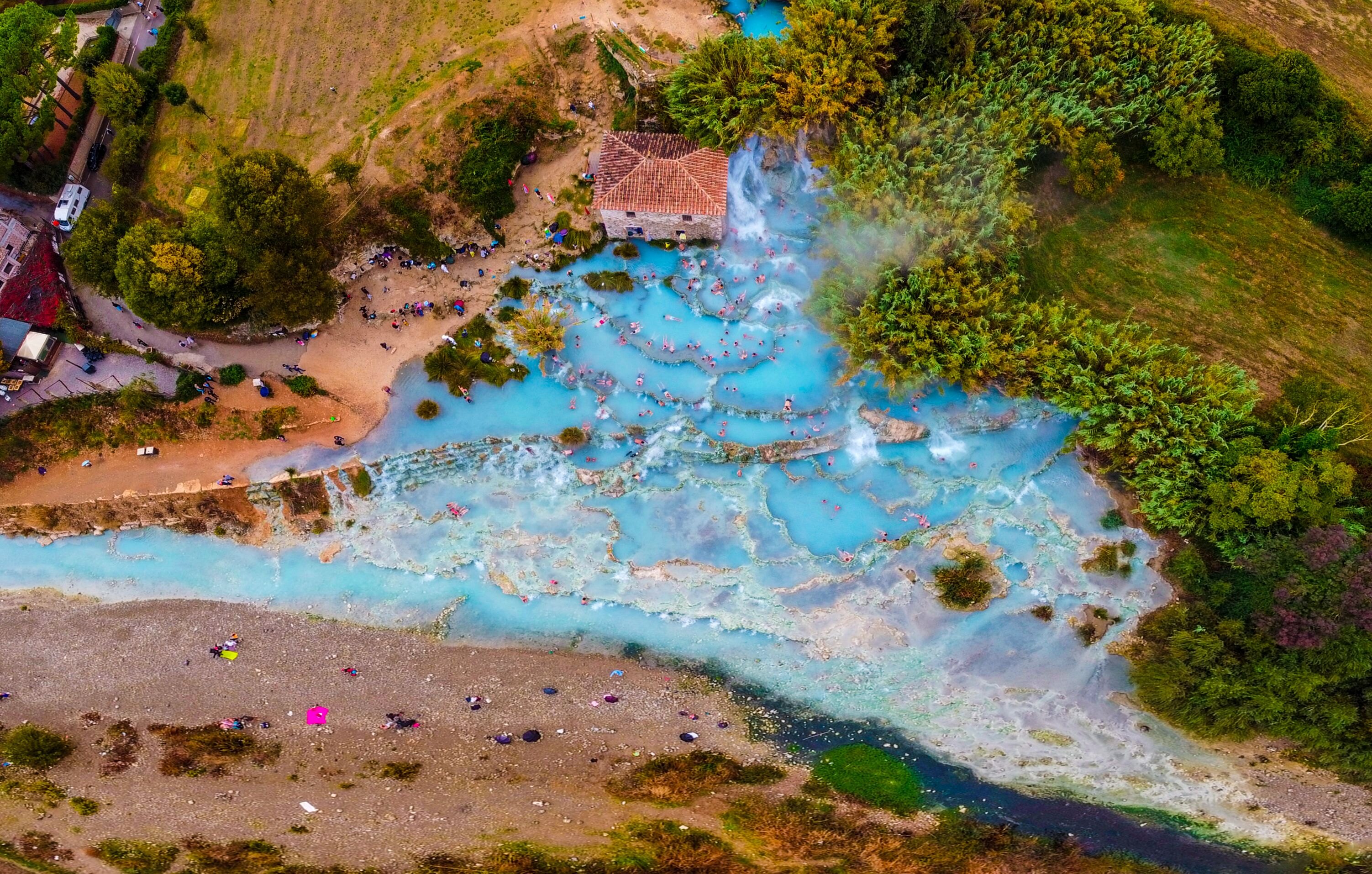
Saturnia thermal falls
Highlight · Grosseto
Parco della Maremma
Highlight · Grosseto
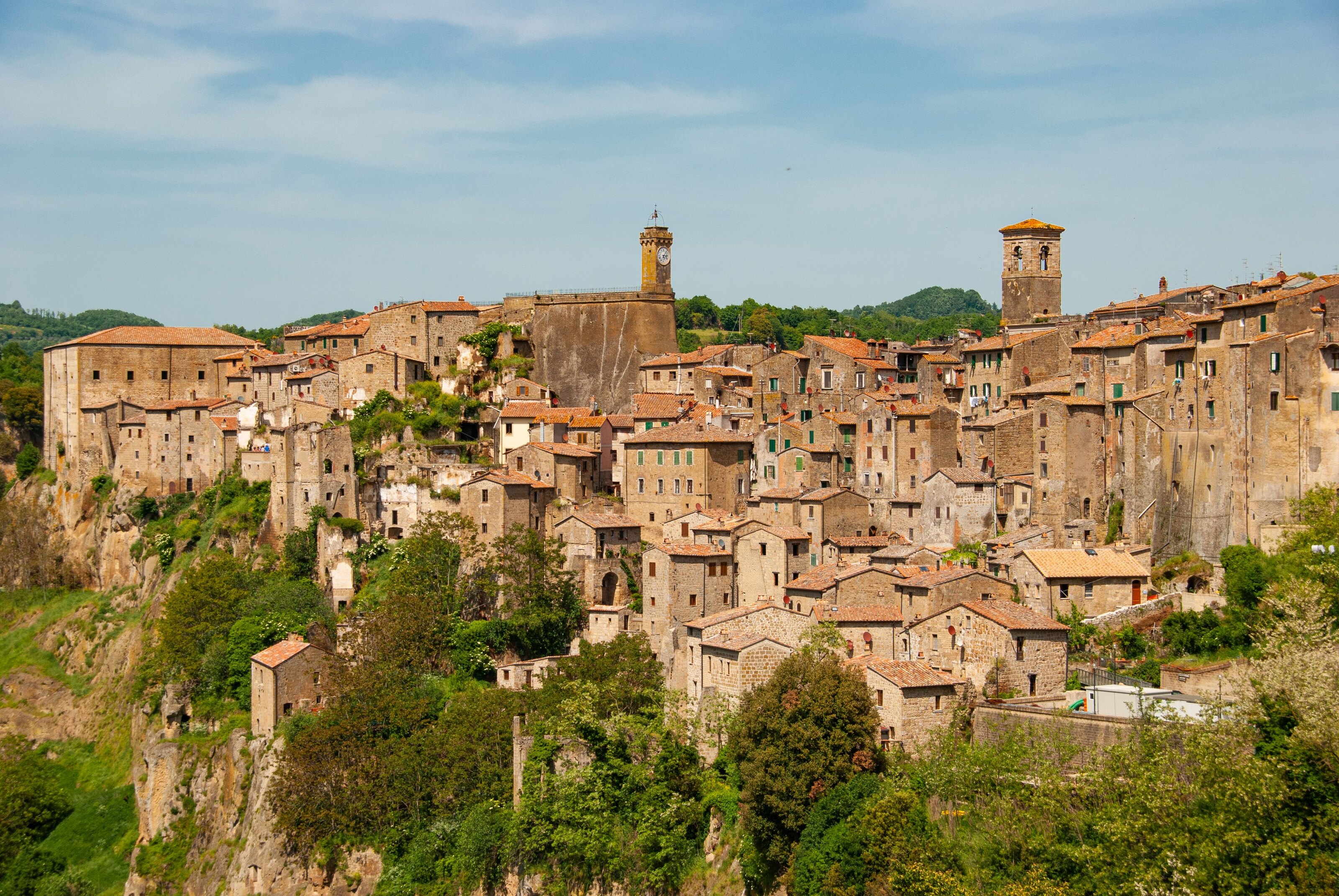
Pitigliano tufa town
Highlight · Grosseto
Monte Argentario
Highlight · Grosseto
About Grosseto
A short history
The Maremma is Tuscany's wild south — and for most of recorded history its hardest place to live. From the Etruscan period through to the 1930s it was a malarial coastal plain, sparsely populated, scattered with isolated Etruscan necropolises and one or two hilltop tufa towns built into volcanic rock. Mussolini's land-reclamation project drained the malarial swamps in the 1930s; in the post-war decades the Maremma slowly became a place travellers found.
It still feels emptier than the rest of Tuscany. Where Chianti has a winery every 500 metres, the Maremma has open scrub, herds of Maremmana cattle (with their distinctive long horns), butteri (the local cowboys) and white-sand beaches that stretch for kilometres without infrastructure. The light is different too — closer to North African than central Italian, harsh at midday and gold at dusk.
The province is named for its capital, Grosseto — a small, walled medieval town that most travellers skip in favour of the coast or the inland tufa towns (Pitigliano, Sorano, Sovana). Skip Grosseto town only if you must; the old centre is worth two hours.
Where to base
Four useful zones. None requires a long drive between them.
Pitigliano (or nearby Sorano/Sovana). Tufa-built hilltop town in the inland south. Best for the Etruscan-tomb circuit. €80–€140/night for B&Bs in town; agriturismi in the surrounding hills run €100–€180.
Saturnia. Tiny village near the famous thermal cascades. Stay here if soaking in the free thermal pools at dawn is your priority. Limited inventory — book 2 months ahead in season.
Argentario peninsula. The most polished part of the Maremma coast. Porto Ercole (smarter, yacht crowd) and Porto Santo Stefano (working fishing port) sit on opposite sides. €150–€300/night in summer.
Parco della Maremma area (Alberese / Talamone). Best for wildlife, hiking and beach combos. Agriturismi inside the park boundaries from €120/night.
What to see
Cascate del Mulino at Saturnia. The famous free thermal cascade pools. Open 24/7. Best at dawn — see our thermal-pools guide for timing and alternatives.
Pitigliano. The 'Little Jerusalem' — once home to a substantial Sephardic Jewish community. Walk the synagogue, the kosher butcher's quarter, the carved tufa cellars below the city.
Sovana, Sorano and the Etruscan necropolises. Three small tufa towns within 10km of each other, each with a network of Etruscan tombs and Vie Cave (deep gorge-roads carved by the Etruscans 2,500 years ago). The Sorano-Sovana walk takes 90 minutes.
Parco Regionale della Maremma. 9,000 hectares of pine forest, dunes and pastures. Wild boar, deer, butteri herding cattle. Free entry; pay €5 for the small visitor centre at Alberese.
Monte Argentario. A near-island connected to the mainland by three sand strips (the tomboli). Drive the coastal road for views, swim at La Cantoniera or Cala del Gesso.
Sorano cantine. Underground tufa-cut wine cellars used since Etruscan times. Free guided visits at Cantine del Sasso most weekends.
What to skip
The Saturnia free cascades on a July weekend. The pools fill with hundreds of bathers by 11am. Go on a weekday, or at dawn, or off-season.
Grosseto city as an overnight stay. Worth two hours in the historic walls; not enough to warrant a night.
The coast in late July through August. The Maremma is at its hottest (35°C+ inland), dries to brown, and the better hotels triple their rates. Save the trip for May–June or September–October.
Best time to visit
April–June. Wildflowers in the parks, sea warm enough to swim from late May, restaurants at full operation. Our default.
September. Best month for combining beach + Saturnia. Crowds drop after the 15th.
October–November. Wild-boar season. Smaller restaurants serve cinghiale stew and pappardelle al cinghiale. Mushroom-foraging in the woods around Pitigliano.
December–February. The free thermal cascades at Saturnia are atmospheric in cold weather — steam rising off 37°C water in a 5°C landscape. Sub-zero nights occasional; agriturismi 40% cheaper.
Getting there
By car. Essential for the Maremma. From Florence: 2h 30 via the SGC FI-PI-LI and SS1 Aurelia. From Rome: 1h 45 via the SS1 Aurelia.
By train. Florence → Grosseto is 2h 15 direct; Rome → Grosseto is 1h 30 with one change at Civitavecchia. From Grosseto station you'll still need a rental car or a regional bus.
By air. Rome's Fiumicino (FCO) is the closer major airport — 1h 45 by car. Pisa (PSA) is 2h 15.
Day trips and short loops
The Tufa Triangle. Pitigliano → Sorano → Sovana. One full day, 18km of driving between them, all on small SP roads. The most distinctive single-day Maremma experience.
Saturnia and the thermal trail. Free hot-spring cascades at Saturnia plus three quieter alternatives within 30km. See our free-and-paid Saturnia guide.
The Argentario loop. Drive the perimeter of Monte Argentario — 38km, two hours with stops. Swim at one of the secluded coves on the south side.
The Etruscan road south. Massa Marittima → Vetulonia → Roselle. Three Etruscan / medieval sites in a single afternoon. The wider Livorno coast and the Elba ferry sit two hours north.
Capalbio. The 'Magliano in Toscana' of the Maremma — hilltop village with an art-installation garden (Giardino dei Tarocchi by Niki de Saint Phalle, world-class, easy to miss).
Practicalities
Eat. Pici con sugo all'aglione (thick hand-rolled pasta with garlic-tomato sauce), acquacotta (Maremma 'cooked water' bread soup with egg), wild boar in tutti i forms, fish near the coast. Drink Morellino di Scansano DOCG (the area's red), Vermentino dell'Argentario (white).
Festivals. Festa del Tartufo in Sovana (April), Settembre dell'Arte in Pitigliano (September), Sagra del Tordo in Montalcino (just outside the province, late October).
Read first. Our Saturnia thermal-pools guide covers the free cascades + paid alternatives. Our practical-basics guide covers wider trip logistics.
Read our practical basics before you book — when to come, where to base, how to get around.