 ← All stories
 Bistecca alla Fiorentina, demystified
Chianina beef, a very hot grill, and salt. There is no secret — but there are rules.
Chianina beef, a very hot grill, and salt. There is no secret — but there are rules.
What makes a real Bistecca alla Fiorentina
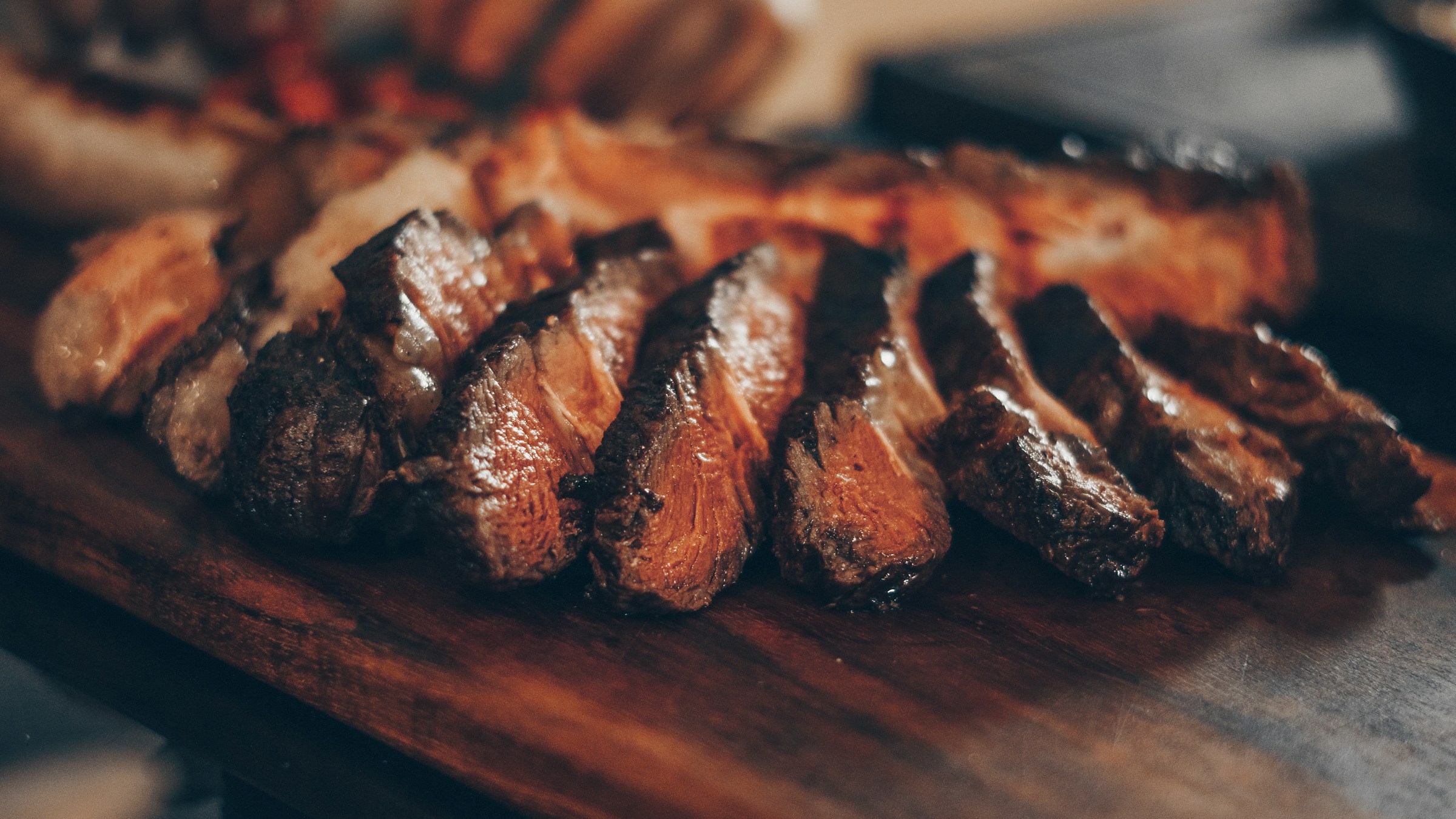
Three things define an authentic Bistecca alla Fiorentina, and any restaurant breaking them is serving something else with the same name. Breed: the meat comes from the Chianina, a white-coated long-horned cattle breed indigenous to the Chiana Valley between Tuscany and Umbria. The breed has IGP-protected status; restaurants can only call their steak 'Chianina' if the meat is certified to that supply chain. Cut: a single bone-in T-bone or porterhouse, at least 3cm thick (4–6cm is more common). The bone matters — it's the heat reservoir that lets the steak cook rare in the middle while crisping on the outside. Cooking: very hot charcoal grill, 4–5 minutes per side, then stood on the bone for another 3–4 minutes. Salted only after grilling, not before. Served rare to the point of barely warm in the centre.
Anything thinner is a bistecchina. Anything cooked beyond medium-rare is a mistake. Anything seasoned with herbs, oil or marinade is not Bistecca alla Fiorentina — it's just a Tuscan steak.
The Chianina cattle breed
The Chianina is one of the oldest cattle breeds in continuous use anywhere — Roman authors described it 2,000 years ago. White-coated, with long horns, raised primarily in the Valdichiana valley (the upper Tiber valley spanning Arezzo, Siena and Perugia provinces). For most of its history the breed was a draft animal — used to plough fields — and the meat was a byproduct. The post-war collapse of farm-animal-as-engine led farmers to almost abandon the breed, until the IGP designation in 1998 created a premium market for the meat and saved the population.
Today around 30,000 Chianina cattle are raised across central Italy. The IGP certification means each animal can be traced from birth — the steaks at certified butchers carry a 16-character certification number. If your bistecca arrives without that paperwork visible, you're not eating Chianina.
Where to order it
The gold-standard format is the macelleria-ristorante: a working butcher's shop that grills its own meat in the back room or a courtyard. Three reliable choices:
Antica Macelleria Cecchini (Panzano in Chianti). The famous Dario Cecchini operation. Three restaurants on the same square: Officina della Bistecca (set menu, theatrical), Solociccia (no-menu, family-style), MacDario (faster, more affordable). Reserve 4+ weeks ahead. €60–€95 per person. (Our seven-day Chianti itinerary includes a Cecchini stop and the route to reach it from Florence.)
Perseus (Florence, Viale Don Minzoni). The classic Florentine bistecca temple, in business since 1953. Less spectacle than Cecchini, more weight on the meat itself. €50–€70 per person.
Trattoria Sostanza (Florence, Via del Porcellana). A 13-table room, no reservations, 1869 vintage. The butter chicken is famous; the bistecca is excellent.
Osteria del Cinghiale Bianco (Florence, Borgo San Jacopo). Smaller, more intimate, the Oltrarno alternative. €45–€60 per person.
Avoid: any tourist-heavy restaurant in Florence offering 'steak alla fiorentina for one' on a printed English menu. The Fiorentina is for sharing. A single-portion 'bistecca' is a different dish trading on the name.
How to order
Specify the weight. Bistecca is priced per etto (100g). Order 1.2kg for two people, 1.6kg for three. Underordering means the steak is too thin for proper cooking; overordering means a kilo of leftovers.
Specify the cut. Costata (rib end, more marbling) or fiorentina classica (T-bone with filet on one side, strip on the other). Most restaurants serve the classic; some let you choose.
Don't ask for it well-done. Italian kitchens will simply refuse. Medium-rare is the absolute maximum cooking level; anything beyond and the bistecca becomes a different (worse) dish.
What comes with it. Traditional sides are fagioli all'uccelletto (white beans in tomato + sage), insalata mista, and roast potatoes. Order at least the beans — they're the canonical pairing.
What to drink. Chianti Classico Riserva — see our food and wine pillar for the Tuscan DOCG primer. A Brunello di Montalcino is correct but unnecessarily expensive. Avoid white; the bistecca needs tannin.
Cooking it yourself
If you're staying at an agriturismo with a barbecue, buying a Chianina bistecca from a certified macelleria and grilling it yourself is one of the great Tuscan experiences. The macellerie in Panzano, Greve and Castelnuovo Berardenga sell bone-in cuts at €55–€85 per kilo.
Method. Charcoal grill, very hot embers (not flames). Don't oil the steak. Sear 4 minutes one side, flip, sear 4 minutes other side, then stand on the bone for 3–4 minutes. Salt generously with sea salt after removing from heat. Rest 5 minutes. Slice off the bone, carve perpendicular to the strip, serve immediately.
The number-one mistake. Cooking it too long. The internal temperature when you remove it from the grill should be 48–50°C — properly rare. By the time it rests, it'll be 52°C. Higher than that and you've ruined a €80 piece of meat.
Eating it
Share between two or three. The classic carving sequence: slice off the strip-side (controfiletto) first in 1cm slices, then the filet side (filetto), then the bone goes to whoever wants to gnaw on it. No knives at the table for the bone-gnawing — it's done with fingers, it's correct.
Sides arrive in the middle of the meal: beans and a green salad. The cheese course is unusual after bistecca; dessert is optional; a second bottle of wine is not.
What it costs. Per person: €55–€80 in a proper macelleria-ristorante, including wine and sides. The same meal at Cecchini's Solociccia is €60 set price. At Sostanza, around €55 per head. Worth budgeting €70–€85 per person for the full Bistecca evening.
Read next. Our Florence region pillar covers the wider city; the seven-day Chianti itinerary passes through Panzano (Cecchini territory) on Day 2.
Frequently asked.
- What makes a real Bistecca alla Fiorentina?
- Three things: Chianina-breed beef (a Tuscan white cattle breed, protected DOCG-style IGP designation), a cut at least 3cm thick (4–6cm typical) including bone, and a weight of 1–1.5kg per steak. Anything thinner, smaller or from a different breed isn't a Fiorentina.
- How is Bistecca alla Fiorentina cooked?
- Over a very hot charcoal grill, 4–5 minutes per side, then stood on the bone for another 3–4 minutes. Served rare — often barely warm in the centre. Salted only after grilling, not before. No oil, no marinade, no sauce.
- Where can I order an authentic Bistecca alla Fiorentina?
- Macelleria-ristoranti (butcher-restaurants) are the gold standard: Dario Cecchini in Panzano, Perseus in Florence, and Osteria del Cinghiale Bianco in Florence. Avoid anywhere that lists "steak" in English on the menu; that's usually a clue.
- How many people does a Bistecca alla Fiorentina serve?
- Two or three. The 1–1.5kg cut is too large for one person and prices it accordingly (€55–€85 per kilogram is typical). Order it for two with sides of fagioli all'uccelletto, salad, and a Chianti Classico Riserva. Don't try to take it home — it's meant to be shared.
Keep reading.
Truffle season in San Miniato
November in a hill town that smells like the forest floor — where to eat, and what to buy.
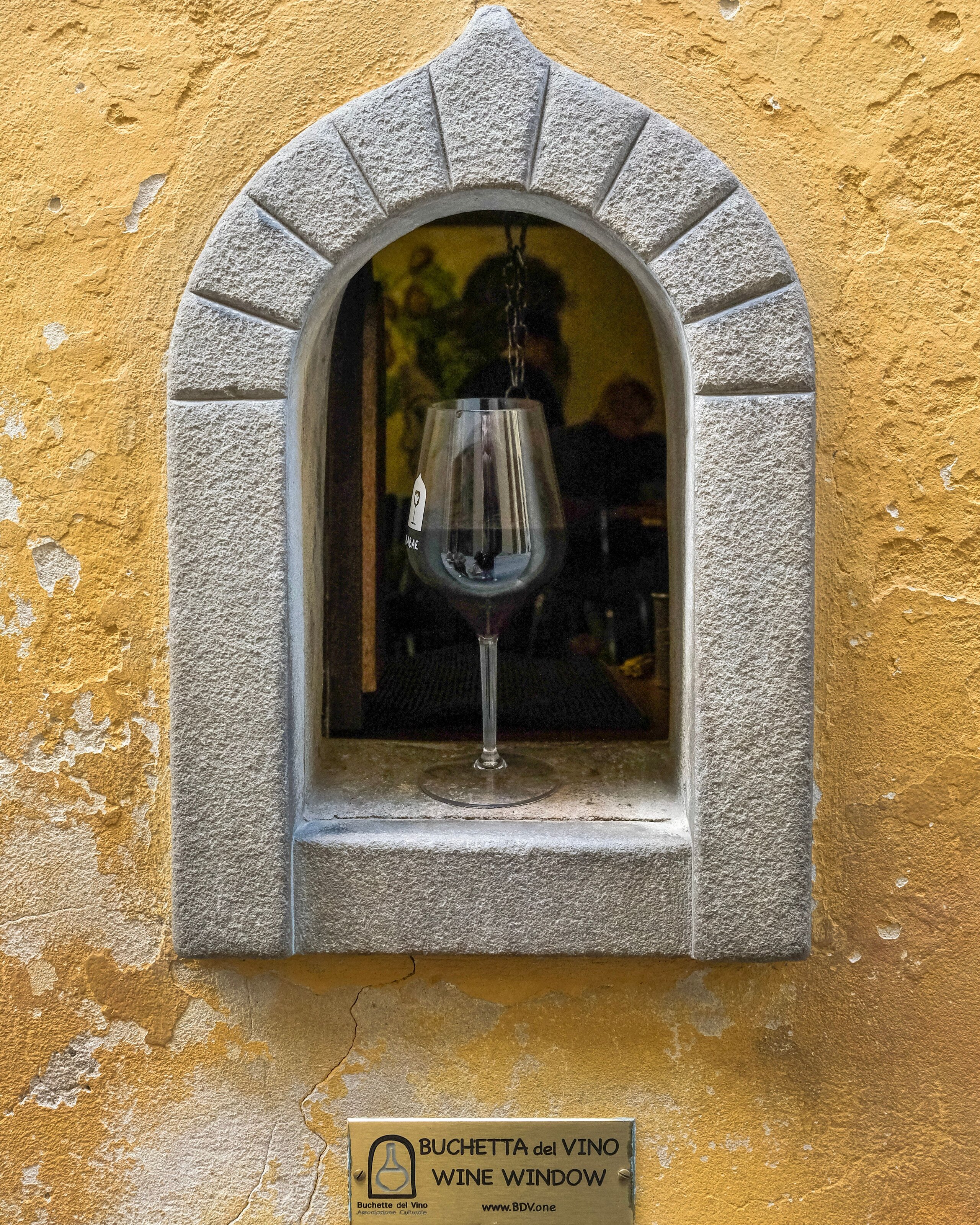
Florence's wine windows — the buchette del vino, demystified
Cellar-to-street wine hatches cut into palazzo walls in the 1500s. Plague-proof in 1630. Quietly re-opened in 2020. Where to find a working one today.