 ← All stories
 Lucca vs Florence — which to base in
Walled-city quiet versus Renaissance density. The honest comparison for visitors who want to skip the queues.
Walled-city quiet versus Renaissance density. The honest comparison for visitors who want to skip the queues.
At a glance
Florence (Firenze) — the Renaissance capital. World-class museums, the densest concentration of art in Europe, the rail and air hub for central Italy. Crowded and expensive in season.
Lucca — the walled city. 4km of intact Renaissance ramparts, a flat centre walkable end-to-end in 20 minutes, no single blockbuster monument. Quieter, cheaper, slower.
What each one is
Florence is the city of the Uffizi, the Accademia, the Duomo, the Bargello, the Pitti — five world-rank museums inside a 20-minute walk. The trade-off is volume: 2 million Uffizi tickets a year, central streets packed by 10am from April to October, and prices that reflect demand.
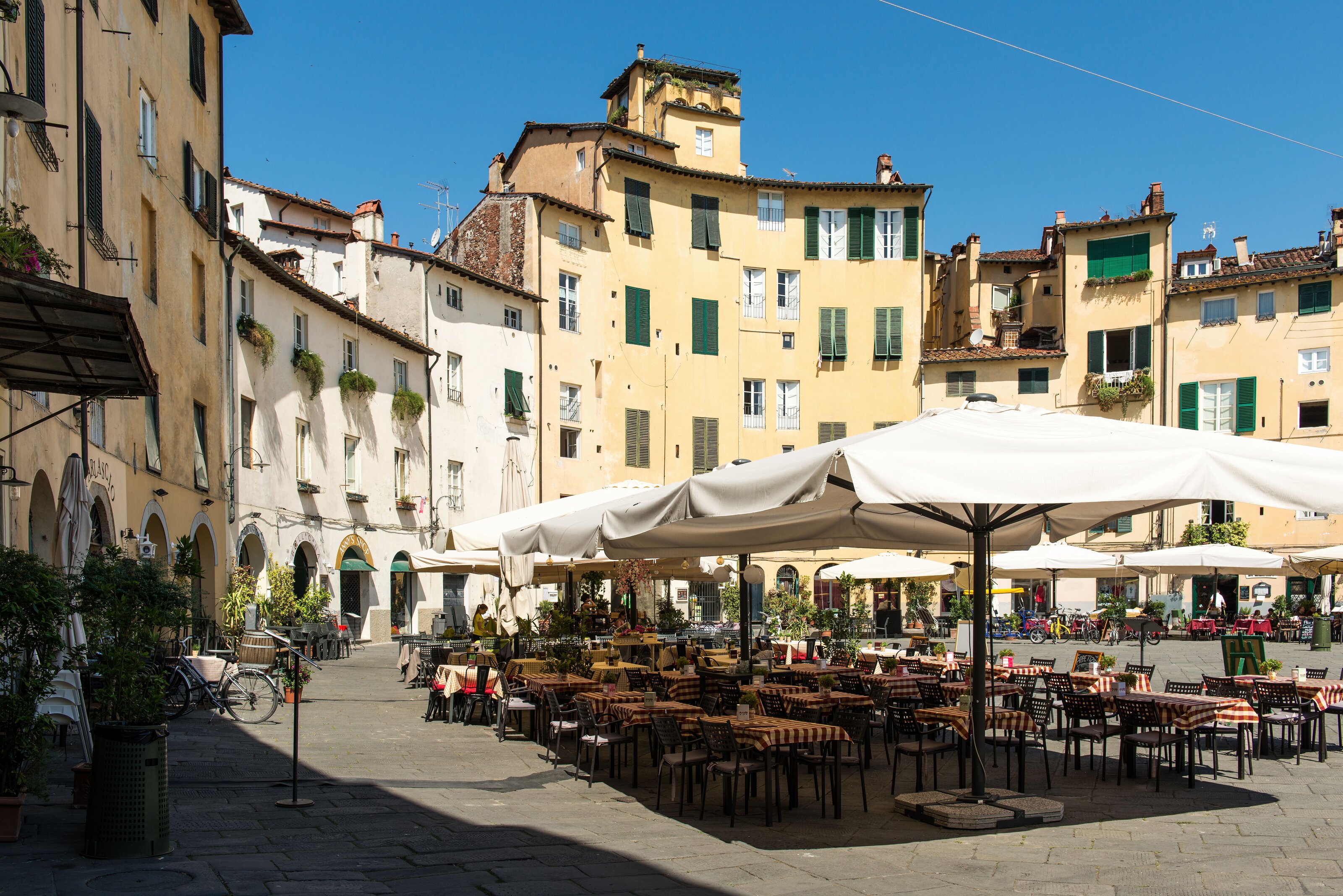
Lucca's centre is a 4km oval ringed by sloping earthwork walls wide enough for a tree-lined boulevard on top. No single sight is famous, but the cumulative experience — the wall walk, the cathedral, the Piazza dell'Anfiteatro shaped by an old Roman amphitheatre, the Torre Guinigi crowned with oak trees — is genuinely calming. Puccini was born here; the opera-house program in summer is excellent.
Where to sleep, and what it costs
Florence. €280–€550 a night for a central boutique room in season; €180–€280 in Oltrarno. Budget €100–€160 around the station — functional, not atmospheric.
Lucca. €130–€220 for a comparable inside-the-walls boutique. €70–€110 B&B band still alive. Per night, Lucca is roughly 40% cheaper than Florence at the same standard.
Our wider where-to-stay guide breaks down the agriturismo and country-house options around each.
Food
Florence's food scene is wider and louder — bistecca, lampredotto, ribollita, tripe stalls, hundreds of trattorie, Michelin spread across price points. See our Bistecca alla Fiorentina guide for the canonical rooms.
Lucca's food is regional north-Tuscan — tordelli lucchesi (meat-filled pasta), farro soup, buccellato (sweet aniseed bread), olive oil from the Lucca hills (some of the best in Italy). Da Giulio in Pelleria is the institution; Buca di Sant'Antonio is the upscale version. Wine is local Vermentino and Colline Lucchesi reds rather than Chianti Classico.
Day-trip range
From Florence: the rail hub. Pisa (55 min), Lucca (80 min via Pisa), San Gimignano (1h 20m), Siena (90 min by bus), Arezzo (35 min Frecciarossa). The full breakdown in our day-trips-from-Florence-by-train guide.
From Lucca: Pisa (30 min by train), the Versilia coast (Forte dei Marmi, Viareggio — 30 min), Massa-Carrara and the marble quarries (45 min), the Cinque Terre (90 min), the Garfagnana mountains (45 min by car — gateway to the Apuan Alps). Florence itself is 80 minutes by train.
When to choose which
Choose Florence if: Renaissance art and museum density are the main draw, you want maximum day-trip reach by train, you're flying in/out of Florence airport, or you don't mind paying more for the central experience.
Choose Lucca if: queues and crowds matter, you want to cycle the city walls every morning, you'd rather pay 40% less for a similar standard, you're flying into Pisa, or you want easy access to the coast and the mountains as well as the cities.
Or do both: 3 nights Florence + 3 nights Lucca, with the train between them, is the no-car version of a balanced week.
Frequently asked.
- Is Lucca better than Florence for a first Tuscany visit?
- It depends what you came for. If world-class Renaissance art is the goal, Florence wins. If a quieter, more atmospheric base with easy access to the coast and mountains matters more, Lucca is the better choice. Many week-long trips do well to split between both.
- How far is Lucca from Florence?
- About 80 km — 80 minutes by direct train (via Pisa Centrale, change platforms; no need to change train operators) or 90 minutes by car via the A11. The train is the better choice; Florence centre is a ZTL and parking is expensive.
- Is Lucca cheaper than Florence?
- Yes — roughly 40% cheaper for hotels at the same standard, slightly cheaper for restaurants, similar for museum tickets (Lucca's museums are smaller and cheaper anyway). Total trip cost is dominated by accommodation, which is where the gap shows.
- Can I cycle in Lucca?
- Yes — the 4km wall around the city is wide enough for a bike path on top, and it's the iconic Lucca experience. Bike rental at the foot of the walls runs €4–€6 per hour or €20–€25 per day. Beyond the walls, Lucca is the flattest of the major Tuscan cities — easy cycling out into the countryside too.
- Which has better day trips, Florence or Lucca?
- Florence reaches more places by train (Pisa, Lucca, Arezzo, Siena, Bologna, Rome). Lucca reaches a different and arguably more varied set (coast at Forte dei Marmi, marble at Carrara, Cinque Terre, the Garfagnana mountains, Pisa) — and crucially, Lucca is itself a less crowded base. For Tuscany-only trips, Lucca is the more interesting half of a Florence + Lucca pair.
Keep reading.
When to come: a month-by-month field guide
Weather, crowds, festivals and what's on the plate, broken down.
Where to stay in Tuscany — a planning guide
City base versus countryside agriturismo, which towns suit which traveller, and the three mistakes first-timers make.
Florence vs Siena — which to base in
Two great Tuscan cities, two very different stays. The honest comparison: art, food, crowds, cost, day trips.