 ← All stories
 Chianti vs Val d'Orcia — which to base in
Both inside Siena province, both world-famous, very different trips. Wine, landscape, crowds, drive times, and which one suits you.
Both inside Siena province, both world-famous, very different trips. Wine, landscape, crowds, drive times, and which one suits you.
At a glance
Chianti. The 70-km strip between Florence and Siena. Vine-covered, hill-folded, dotted with stone villages — Greve, Panzano, Radda, Castellina, Gaiole, Castelnuovo Berardenga. Wine is Chianti Classico (Sangiovese). Driving is easy and roads are sealed.
Val d'Orcia. The UNESCO-listed valley 90 minutes south of Siena. Clay hills, isolated cypress avenues, Pienza, Montalcino, Montepulciano, Bagno Vignoni. Wine is Brunello di Montalcino and Vino Nobile di Montepulciano. More driving, more drama, more remote.
Landscape
Chianti's landscape is dense and intimate — vines on every south-facing slope, woods on every ridge, stone farmhouses every kilometre. You can drive 20 minutes from your agriturismo and visit four estates before lunch. The visual signature is the dense forest-and-vine mosaic and the cypress lines around farmhouse driveways.
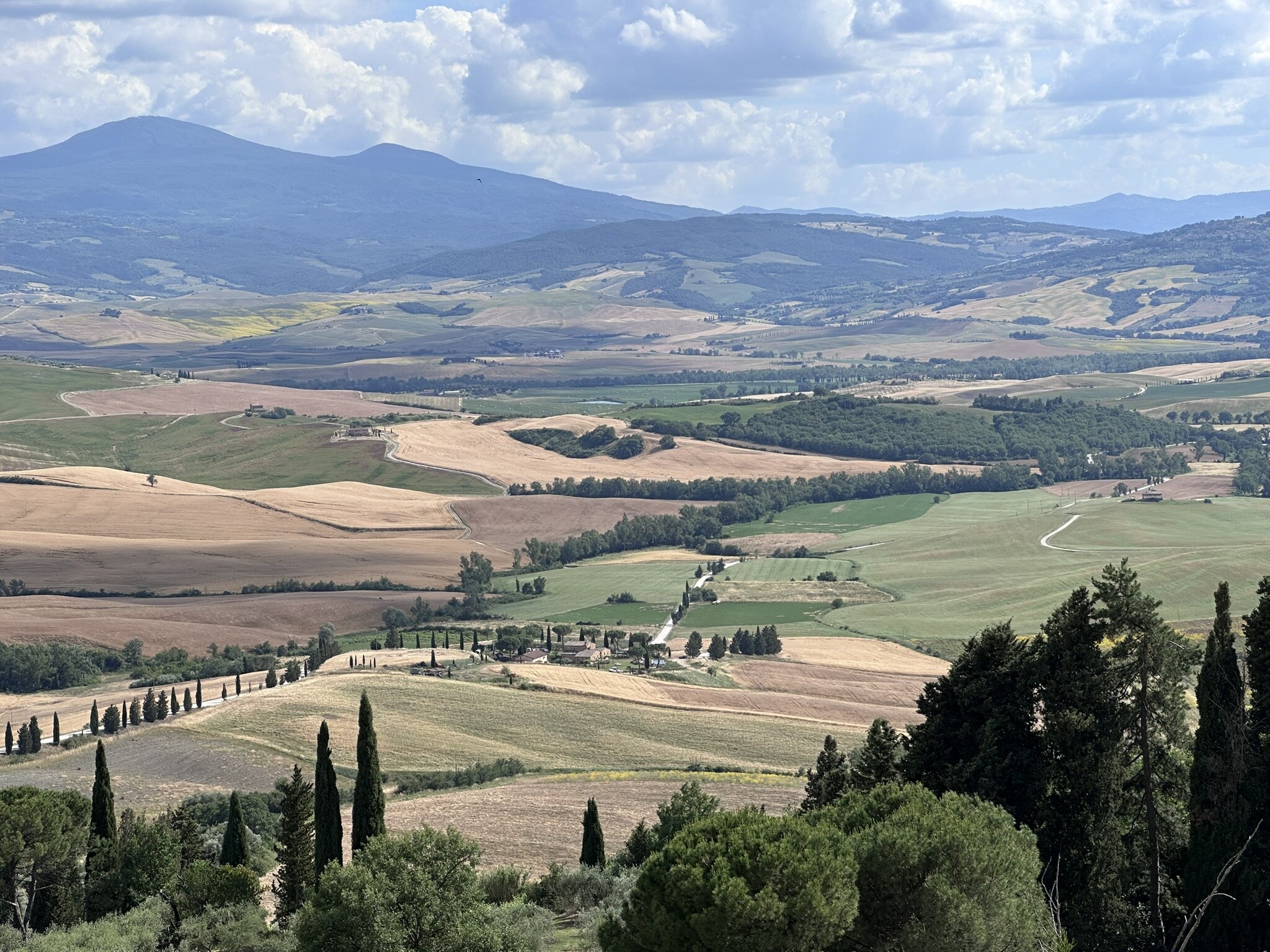
The Val d'Orcia's landscape is open and theatrical — long views, fewer trees, single cypresses on hill ridges, the famous chapels-with-cypress-line compositions (Cappella di Vitaleta, the Cipressi di San Quirico). It is the landscape of Gladiator's afterlife scene, of every Tuscany photography poster. See our photography guide for the signature locations.
Wine
Chianti's headline wine is Chianti Classico DOCG (made from Sangiovese, in a specific zone between Florence and Siena). At entry level it pairs with everything; Riserva and Gran Selezione are serious wines that ask for a heavier dish. Daily cellar visits are the norm — Castello di Verrazzano, Castello di Brolio, Fonterutoli, Felsina, Fattoria Lamole, Volpaia. Most accept walk-ins.
The Val d'Orcia's headline wines are Brunello di Montalcino (100% Sangiovese, 5-year minimum ageing, one of Italy's most serious reds) and Vino Nobile di Montepulciano (Sangiovese-based, slightly lighter, undervalued internationally). Tastings are typically more formal and require advance booking. Casanova di Neri, Biondi-Santi, Avignonesi, Boscarelli are the names to know.
Both belong inside the wider Tuscan DOCG landscape; Chianti is the easier wine education, Val d'Orcia is the deeper one.
Food
Chianti's food culture is closer to Florence — bistecca alla Fiorentina (see the breed primer), ribollita, panzanella, crostini di fegatini. Dario Cecchini in Panzano is the canonical butcher; our seven-day Chianti itinerary covers the trattoria circuit.
Val d'Orcia food is pecorino-led (Pienza is the cheese town), pici with cinghiale, lamb in spring, white truffle in autumn from nearby San Giovanni d'Asso. Heavier on dairy, lighter on beef. Restaurants are sparser — eat where your agriturismo recommends.
Day-trip range
From Chianti: Florence (35–60 min), Siena (20–40 min), San Gimignano (40 min), the southern Val d'Orcia is a 90-minute drive south. Central position is Chianti's main practical advantage.
From Val d'Orcia: Siena (40–60 min), Montepulciano and Montalcino on the doorstep, Saturnia hot springs 1h 15m south, Florence 2 hours each way. The valley is more of a destination than a hub.
Crowds and timing
Chianti spreads crowds across many small villages — even at peak, Greve at lunch is busy but Radda is fine. The roads can be slow in August. Best months: May, June, late September.
Val d'Orcia concentrates crowds into Pienza and the Vitaleta chapel viewpoint. Both can be packed midday May–September. Best months: late April, late September, October.
When to choose which
Choose Chianti if: it's your first Tuscany rural trip, you want a wine education across many producers, you want Florence and Siena as day trips, or you have only 4–5 nights in the countryside.
Choose Val d'Orcia if: you've done Chianti before, landscape photography matters, you want Brunello specifically, or you have 6+ nights and don't mind a more remote stay.
Or do both: 3 nights Chianti + 3 nights Val d'Orcia, with the move through Siena. This is the textbook second-visit week.
Frequently asked.
- Are Chianti and the Val d'Orcia in the same Tuscan region?
- Both sit inside the province of Siena — though Chianti's northern half spills into the province of Florence. Administratively they're in the same broad area; experientially they're 90 minutes apart and feel like different trips.
- Is Chianti or the Val d'Orcia better for a first Tuscany trip?
- Chianti is the more practical first base — denser villages, easier cellar visits, central position between Florence and Siena, the widest agriturismo selection. The Val d'Orcia is the better second-visit base when you've already covered Chianti.
- What's the difference between Chianti Classico and Brunello?
- Both are Sangiovese-based but from different DOCG zones. Chianti Classico is from the central Chianti hills (Greve, Radda, Gaiole, Castellina, Castelnuovo Berardenga); Brunello di Montalcino is from a single town zone in the Val d'Orcia, requires 5 years of ageing (including 2 in oak), and is generally the more powerful, age-worthy wine.
- How far is the Val d'Orcia from Florence?
- Roughly 2 hours by car each way (Florence to Pienza is 175 km via the A1 and SR2). It's doable as a long day trip but the drive eats the day; staying overnight in the valley is strongly recommended.
- Which has better photography, Chianti or the Val d'Orcia?
- Val d'Orcia, by a wide margin. The combination of open hills, isolated cypress trees, and the specific Renaissance-era farmhouse-and-chapel compositions is unique and largely unavailable in Chianti. See our <a href="/stories/val-dorcia-photo">photography guide</a> for the signature spots.
Keep reading.
When to come: a month-by-month field guide
Weather, crowds, festivals and what's on the plate, broken down.
Where to stay in Tuscany — a planning guide
City base versus countryside agriturismo, which towns suit which traveller, and the three mistakes first-timers make.
Florence vs Siena — which to base in
Two great Tuscan cities, two very different stays. The honest comparison: art, food, crowds, cost, day trips.