Viareggio beaches — the train-accessible Tuscan riviera
Wide sand, Liberty-era beach clubs, and a station 800m from the sea. The most rail-friendly Tuscan beach town, decoded.
Wide sand, Liberty-era beach clubs, and a station 800m from the sea. The most rail-friendly Tuscan beach town, decoded.
Where Viareggio fits
Viareggio sits at the southern end of the Versilia — the 30km stretch of flat, fine-sand Tuscan coast running from Marina di Carrara in the north (in Massa-Carrara) south past Forte dei Marmi, Lido di Camaiore, Viareggio, and Torre del Lago. It is the largest town on the Versilia (62,000 people), the railway hub, and the one with the most layered identity: a working fishing port, a Liberty-era seaside resort, a carnival town, and the place Italians from Florence and Pisa come for the weekend.
The town divides into three zones. The Marina (the seafront) runs 4km of Liberty-era promenade — the Passeggiata — fronted by hotels and the famous stabilimenti balneari (beach clubs). The Darsena is the old fishing port one kilometre south, still a working fleet but increasingly the design and dinner side of town. The Centro storico sits one street back from the sea, with the wider grid of markets, churches and trattorie. Most visitors stay near the Passeggiata; locals eat in the Darsena.
The beach: free, paid, and how it actually works
Italian beach culture splits into spiagge libere (free beaches) and stabilimenti balneari (private beach clubs that rent you an umbrella + lounger pair for the day). Viareggio has roughly 4km of free beach (mostly at the Levante end and a strip between the clubs) and 5km of stabilimenti. Most Italians use a stabilimento for the long, equipment-heavy days — but the free beach works perfectly for a half-day visit if you bring a towel.
Free beach (spiaggia libera). The biggest free stretch is at the Levante end near the lighthouse — 800m of open sand, fewer crowds, no facilities. Smaller free strips slot between the stabilimenti at irregular intervals. Bring sunshade (the sand is wide and shadeless) and water. No entry fee. Lifeguard cover in season.
Stabilimento (beach club). Pick a club, pay at the entrance (cash or card), get assigned an umbrella + two loungers (ombrellone e due sdraio) in a numbered row. Use of changing cabins, freshwater showers, deckchair-side service is included. Most have a bar/restaurant for lunch. Daily rates: €25–€40 in the back rows, €45–€70 in the first row by the sea, €80–€140 at the top-end clubs at peak August. Weekly rates are typically 6× daily, monthly 18× — locals book a row for the whole summer.
What to expect at the umbrella. Beach service starts mid-morning — staff bring water, coffee, an aperitivo. Lunch is upstairs at the club (€20–€40 per person) or you walk back to the Passeggiata. Italians stay on the beach 9am–1pm and 4pm–7pm with a long midday break for lunch and a nap at the hotel.
Which stabilimento and the vibe
Viareggio's clubs are family-friendly and traditional rather than the design-magazine crowd you find in nearby Forte dei Marmi. The Liberty-era clubs are the architectural highlights; the modern ones are the easiest to use.
Bagno Balena (Lungomare Carducci). Liberty-era pavilion (1900s), striped umbrellas, the most photographed of the historic clubs. Mid-range price (€35–€55 daily), excellent fritto misto upstairs at lunch. Good for first-time visitors who want the classic Versilia ritual.
Bagno Felice (Viale Manin). A century-old club at the Levante end — closer to the lighthouse, smaller crowd, the local-Italian-family choice. €30–€45 daily.
Bagno Liberty (Viale Margherita). Beautifully restored 1920s pavilion; arguably the prettiest stabilimento on the coast. €40–€60 daily, the restaurant is one of the better seafront kitchens.
Bagno Imperiale (Viale Carducci). Larger, family-focused, with a dedicated kids' play area and shallow swimming line. €30–€50 daily.
Bagno Principe di Piemonte (in front of the Grand Hotel Principe di Piemonte). The hotel's private beach club. Walk-up day rates €70–€120 but always available. Quieter, neater, the smart-casual end of Viareggio without the Forte dei Marmi price tag.
If a designer-club ritual matters to you (Twiga, La Capannina, Augustus Beach), take the train two stops north to Forte dei Marmi — same Versilia coast, very different scene. Viareggio's pleasure is the unselfconscious classic version.
The Passeggiata and Liberty architecture
Viareggio's Passeggiata is the 4km seafront boulevard along Viale Carducci and Viale Margherita. The original wooden bathing pavilions burned in 1917; the rebuild between 1918 and 1929 produced one of Italy's best concentrations of Liberty-style (Italian Art Nouveau) architecture: the Gran Caffè Margherita with its onion-domed towers, the Magazzini Duilio 48 with its blue-and-white tile facade, the Bagno Balena pavilion, the Hotel Plaza e de Russie. Architects worth looking up: Galileo Chini (who decorated the King of Siam's palace before turning to Viareggio), Alfredo Belluomini, Ugo Giovannozzi.
Walk the Passeggiata north to south in the late afternoon — the light hits the seaward facades, the bicycles and gelati and umbrellas come out, the entire 4km becomes a slow social parade. It is the most pleasant evening hour in any Tuscan beach town.
What to eat
Viareggio's food is Tyrrhenian fish at every price point. The Darsena (old fishing port) is where you eat seriously; the Passeggiata is where you eat conveniently.
Ristorante Romano (Via Mazzini). The famous one. One Michelin star, family-run since 1966, the canonical Viareggio fish-tasting menu. €100–€140 per person. Book 3+ weeks ahead.
Pizzeria-Trattoria Da Giorgio (Via Zanardelli). Old-school working trattoria a block back from the Passeggiata. Spaghetti allo scoglio for €15. No-reservations, walk in early.
Cantine Marco Polo (Via Cesare Battisti). Wine bar + small plates in the Darsena. The right place for cicchetti-style snacks paired with Versilian DOC whites.
What to order. Spaghetti allo scoglio (with rock-pool seafood), spaghetti alle arselle (with tiny clams from the Versilia shore), cacciucco (the five-fish stew — Viareggio's version is lighter than the canonical Livornese recipe), fritto misto, and grilled orata (sea bream). For dessert, look for la torta coi becchi (a Viareggio-Lucchese chard-and-ricotta tart). Drink Vermentino dei Colli Apuani or Candia dei Colli Apuani — see the wider Tuscan DOC/DOCG landscape for context.
Aperitivo. Gran Caffè Margherita on Piazza Mazzini (Puccini's regular table is marked). The classic Versilian aperitivo is a Spritz Veneziano or a Negroni Sbagliato.
Getting there from Florence, Lucca, Pisa
Viareggio's railway station sits 800m from the sea — a 10-minute walk down Via XX Settembre — making it the easiest Tuscan beach to reach by train. The station is on the Genova–Pisa–Roma main line, which means frequent service in every direction.
From Lucca. 25 minutes by direct regional train, €3.90, hourly. The most natural pairing — many visitors base in Lucca and day-trip to Viareggio for the beach.
From Pisa Centrale. 20 minutes by direct regional train, €3.50, twice an hour. The shortest hop. Pisa airport (PSA) is one stop from Pisa Centrale — total transit from arrival hall to beach is roughly 50 minutes.
From Florence Santa Maria Novella. 80 minutes by direct regional train (€11.10) — same train, no change. Twice an hour all day. Slightly faster via Frecciarossa to Pisa + regional connection (75 min, €19), but the direct regional is the easier choice. The full Florence-rail playbook is in our day-trips-from-Florence-by-train guide.
From Massa-Carrara / Forte dei Marmi. 12 minutes by regional, €2.80. Forte dei Marmi-Seravezza-Querceta station to Viareggio. Day-trippable in either direction.
From Bologna. 2 hours by Frecciarossa via Florence, €25–€45. Doable as a long day but better as a 2-night overnight.
By car (if you must). A12 motorway to Viareggio exit, 1h from Florence, 30 min from Pisa, 25 min from Lucca. Pay parking near the seafront runs €2–€4/hour in season. The train is genuinely the better option.
When to come
April through early June. Beach clubs progressively open from mid-April. Water is too cold for serious swimming until early June (16–18°C in May) but the Passeggiata, the food and the Liberty walks are all at their best. Hotels run €100–€180/night.
Late June through mid-July. The sweet spot. Water at 22–25°C, full beach-club service, restaurants all open, no Ferragosto crush yet. €150–€280/night.
Mid-July through August. Peak. Hotels €220–€450/night; the second week of August (Ferragosto) is the busiest week of the Italian calendar. Beach-club umbrellas need to be booked a week ahead at the popular stabilimenti.
September. The locals' month. Warm sea (24°C through to mid-September), thinning crowds after the first week, restaurants still full but bookable. €130–€220/night.
February. The Carnival of Viareggio runs four Sundays + Shrove Tuesday from late January to mid-February. Monumental papier-mâché floats, one of Italy's three biggest carnivals, deeply local. Not a swimming trip but a remarkable visit. €90–€160/night.
Where to stay
Grand Hotel Principe di Piemonte (Piazza Puccini). The Liberty-era grand hotel directly on the seafront. Their own beach club included. €240–€480/night in season. The full Versilia ritual at not-quite-Forte-dei-Marmi prices.
Hotel Plaza e de Russie (Piazza d'Azeglio). Older, family-run, beautifully preserved Liberty interiors, rooftop terrace. €180–€320.
Hotel Mirage (Viale Carducci). Mid-range seafront hotel with views from upper-floor rooms. €130–€220.
B&Bs in the Centro Storico. €80–€130 a night for a comfortable double a block back from the sea. Plenty of stock; book 4 weeks ahead in July–August.
Don't stay in the Darsena unless you specifically want the working-port feel — it's lively but at street-noise levels through the small hours.
Read on
Our Lucca region pillar covers the wider province (Viareggio is in Lucca province), and the inland city makes the obvious base if you're combining Viareggio with culture days. The Massa-Carrara pillar covers the upper Versilia (Forte dei Marmi and the Versilia north). For an inland day from the coast, see the Apuan Alps traverse — the marble mountains visible from any Viareggio rooftop. If you'd rather skip the coast and aim for an island, the Elba car-free guide is the natural counter-pairing.
Frequently asked.
- Can I get to Viareggio from Florence by train?
- Yes — direct regional trains run from Florence Santa Maria Novella to Viareggio in 80 minutes, twice an hour, €11.10 one-way. No change required. Viareggio's station is 800m from the beach — a 10-minute walk.
- How do I get from Lucca to Viareggio?
- Direct regional train, 25 minutes, €3.90, hourly. The Lucca–Viareggio pairing is the most natural day-trip combination on the Tuscan coast — many visitors base in Lucca and beach-day in Viareggio.
- How much does a Viareggio beach club cost?
- Daily rates for an umbrella + two loungers run €25–€40 in the back rows, €45–€70 in the first row by the sea, and €80–€140 at the top-end clubs at peak August. Free public beach (spiaggia libera) is available at the Levante end and in strips between the clubs.
- Is Viareggio family-friendly?
- Yes — Viareggio's stabilimenti are traditional Italian family beach clubs with shallow swimming lines, dedicated kids' play areas (Bagno Imperiale and Bagno Balena are particularly good), changing cabins and beach-side service. The Passeggiata is flat and pram-friendly. Far more family-suited than nearby Forte dei Marmi.
- What's the difference between Viareggio and Forte dei Marmi?
- Both are on the Versilia coast (Viareggio in Lucca province, Forte dei Marmi in Massa-Carrara province). Viareggio is larger, more traditional, more accessible by train, and significantly cheaper. Forte dei Marmi is smaller, more exclusive, with designer beach clubs (Twiga, La Capannina) and a smart-set crowd. Viareggio for the classic Italian beach holiday; Forte dei Marmi for the magazine version.
- When is the Carnival of Viareggio?
- Four Sundays plus Shrove Tuesday between late January and mid-February each year. The Carnival of Viareggio is one of Italy's three biggest, famous for the monumental papier-mâché floats made in the year-round Cittadella del Carnevale workshops on the edge of town.
Keep reading.
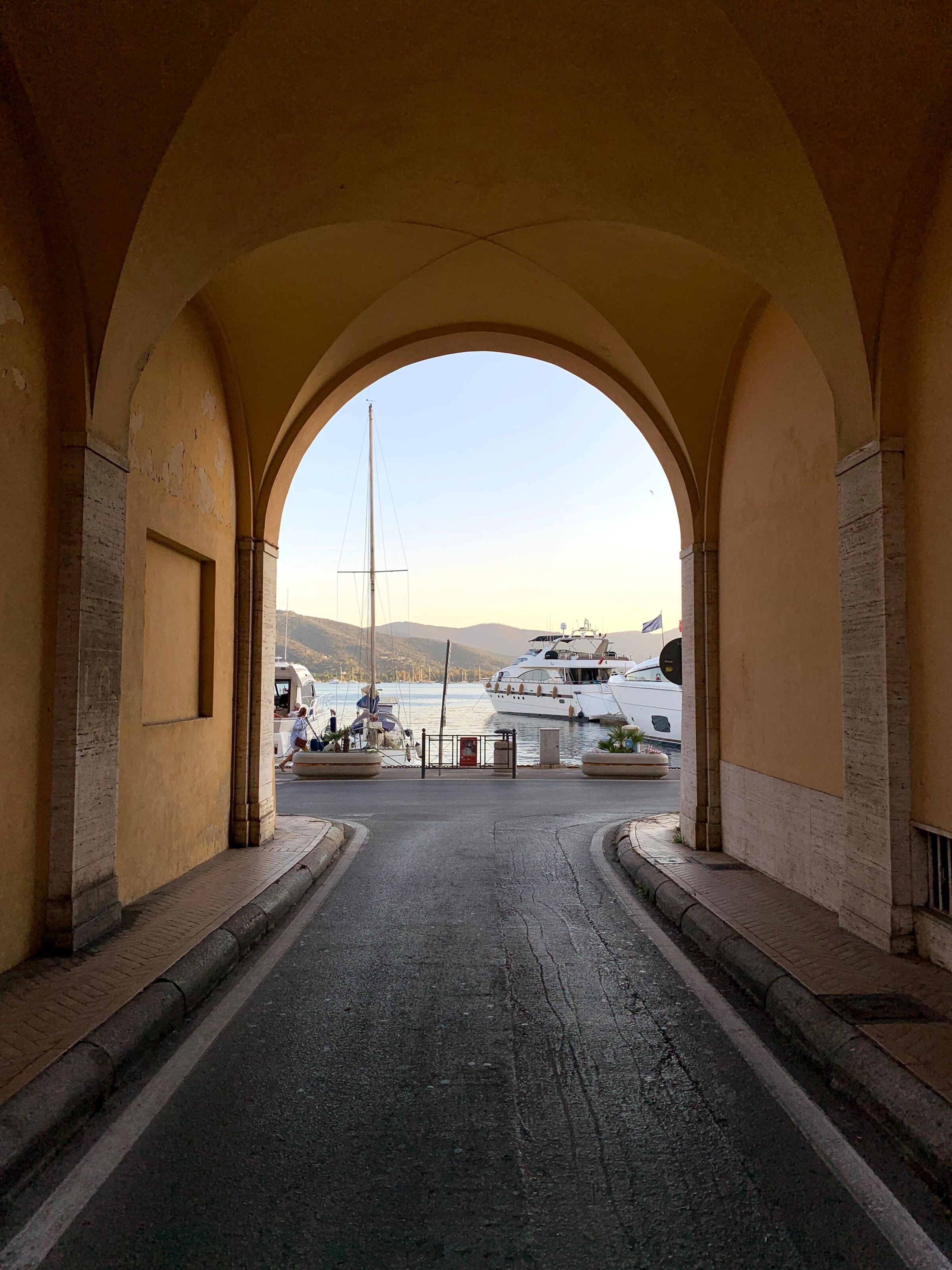
Elba, by ferry and by bike
How to do the biggest Tuscan island without a car — hydrofoil, coastal buses and rented e-bikes.
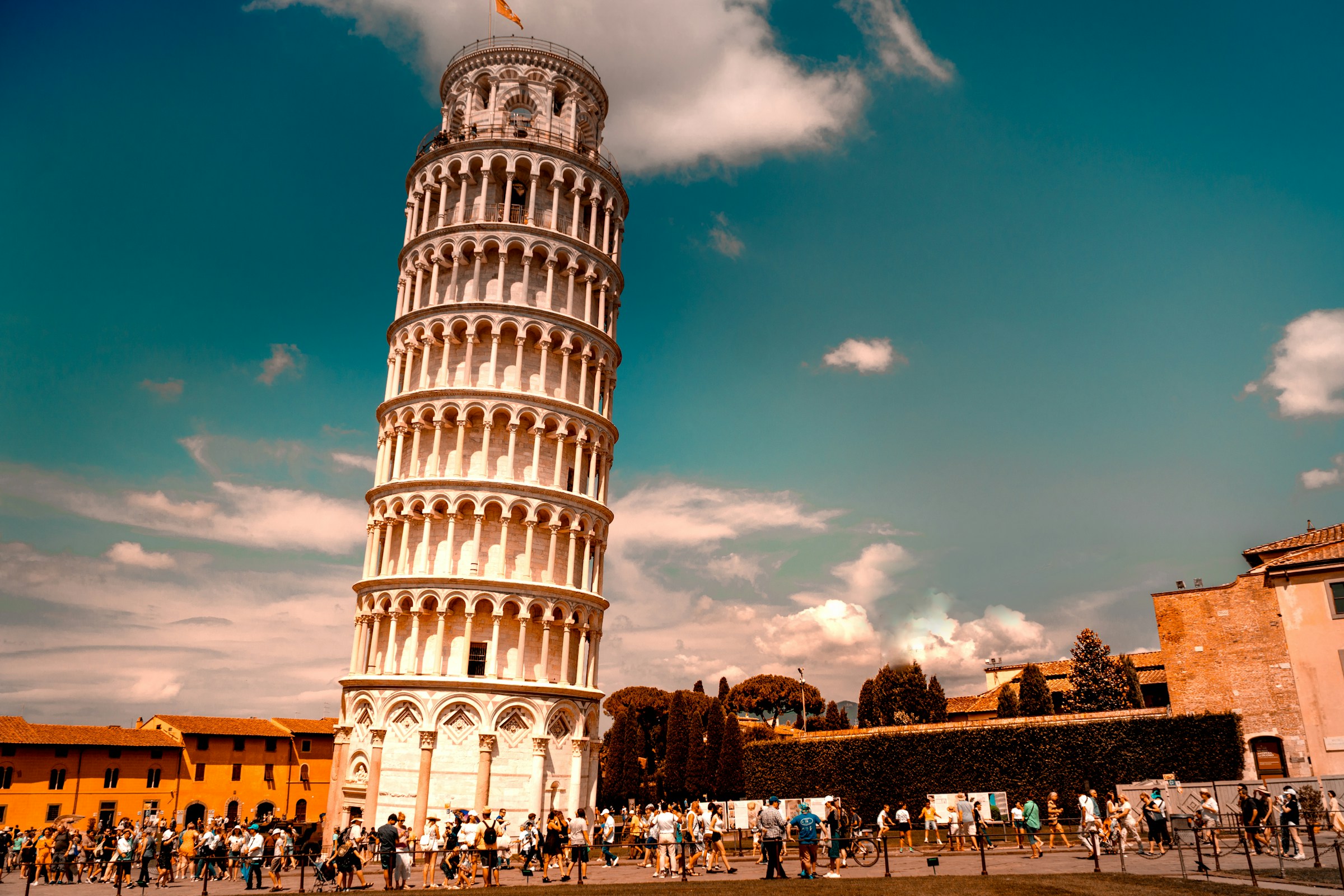
Day trips from Florence by train
Twelve destinations reachable without a car, sorted by travel time and what to do when you get there.
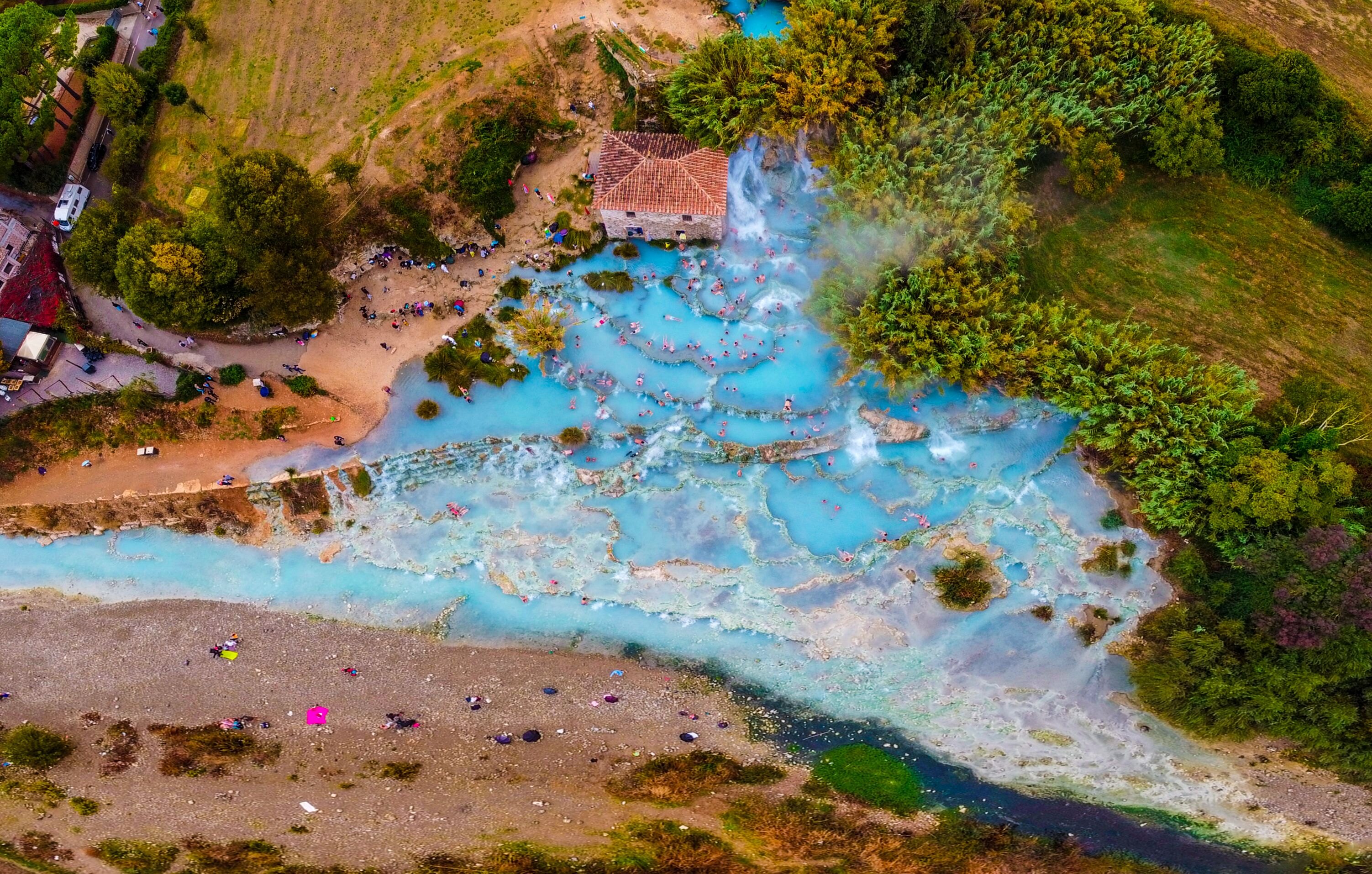
Soaking at Saturnia, free and paid
The cascade everyone posts about, plus three quieter alternatives within 20km — and the rules nobody tells you.