Michelangelo's David at the Accademia — tickets, timing, and what else is inside
The 2026 ticket price, the best time to see David without a crowd, the unfinished Prisoners that explain him, and why an hour is enough.
The 2026 ticket price, the best time to see David without a crowd, the unfinished Prisoners that explain him, and why an hour is enough.
Tickets and hours
Price. A full ticket is €20 since 1 February 2026; booking online adds a reservation fee. Reduced and free categories follow the national rules (under-18s free; EU citizens aged 18–25 reduced). Check the official museum site before you travel.
Combined tickets. A €26 ticket covers the Accademia and the Bargello sculpture museum over 48 hours — the Bargello has Donatello's bronze David, a natural companion. A €38 ticket covers five museums in the group over 72 hours.
Hours. Tuesday to Sunday, 8:15 to 18:50. Closed Mondays, 1 January and 25 December. The ticket desk closes before the galleries; arrive by 6pm.
Free days. The first Sunday of each month, plus some national holidays. Expect queues of two hours or more and no reservations.
Booking. Use the museum's official booking channel. Resellers' 'skip-the-line' tickets are the same timed reservation at a higher price; guided tours are the only thing they add.
When to go
Midday is worst: tour groups arrive between 10am and 3pm and stand in a horseshoe around the statue. The first slot of the day and the last hour and a half before closing are the calmest. Tuesday to Thursday are quieter than weekends. In winter, mid-afternoon is often fine.
If you can only manage one quiet visit in Florence, spend it here rather than at the Uffizi. David is one object, and seeing him without a crowd is the difference.
David: what you're looking at
Michelangelo was 26 when the cathedral works office gave him a damaged block of Carrara marble that two sculptors had already abandoned. He carved it between 1501 and 1504. The statue is 5.17 metres tall — far bigger than most visitors expect — and was originally meant for a buttress high up on the Duomo, which is why the head and hands are oversized: they were made to be read from below.
Instead, Florence put him outside Palazzo Vecchio as a civic symbol of the young republic standing up to bigger enemies. He stayed there for nearly 370 years, until in 1873 he was moved indoors to protect the marble. The statue in Piazza della Signoria today is a copy, placed in 1910.
Walk all the way round. From the front he is calm; from his left side you see the tension — the furrowed brow, the veins on the right hand, the moment before the throw, not the victory after it. Look at the sling running down his back.
The Prisoners, and the rest of the museum
The Prisoners (Prigioni). Lining the gallery that leads to David are four unfinished figures Michelangelo began for the tomb of Pope Julius II. They are half-trapped in the stone, still showing the claw-chisel marks. They're the best explanation anywhere of how he worked: not adding, but freeing a figure from the block. Don't rush them to get to David.
St Matthew. Another unfinished figure, begun for the cathedral, also in the gallery.
The Gipsoteca. A long hall of 19th-century plaster models, most by the sculptor Lorenzo Bartolini, dotted with the small metal pins used to transfer measurements to marble. Odd and very photogenic.
Musical instruments. A collection from the Medici and Lorraine courts, including stringed instruments by Stradivari. Allow an extra 20 minutes.
Gold-ground paintings. Rooms of 13th- to 15th-century Florentine panel painting — quiet and usually empty.
Practicalities
Bags. Large bags and backpacks aren't allowed; travel light.
Photos. Allowed without flash.
Where it is. Via Ricasoli, five minutes' walk north of the Duomo. The entrance queue for reserved tickets is separate from the one for buying on the day — look for the signs.
Nearby. San Marco, two minutes away, has Fra Angelico's frescoes painted in the friars' cells; the Mercato Centrale is ten minutes west for lunch.
Pair it with. The Uffizi on a different morning, and the Duomo and Brunelleschi's dome. For the city as a whole, start with our Florence guide.
Frequently asked.
- How much does it cost to see the David in Florence?
- A full ticket to the Galleria dell'Accademia costs €20 from 1 February 2026, plus a booking fee if you reserve online. A combined Accademia + Bargello ticket costs €26 for 48 hours.
- Where is Michelangelo's David?
- The original is in the Galleria dell'Accademia on Via Ricasoli in Florence. The statue outside Palazzo Vecchio in Piazza della Signoria is a copy installed in 1910.
- How long do you need at the Accademia?
- About an hour for David, the Prisoners and the plaster-cast hall; up to 90 minutes with the musical-instrument collection.
- What is the best time to visit the Accademia?
- At opening (8:15) or in the last 90 minutes before closing, on a weekday. Avoid 10am–3pm, when tour groups crowd the statue.
- How tall is Michelangelo's David?
- 5.17 metres (about 17 feet) tall, not counting the pedestal — much larger than most visitors expect.
Keep reading.
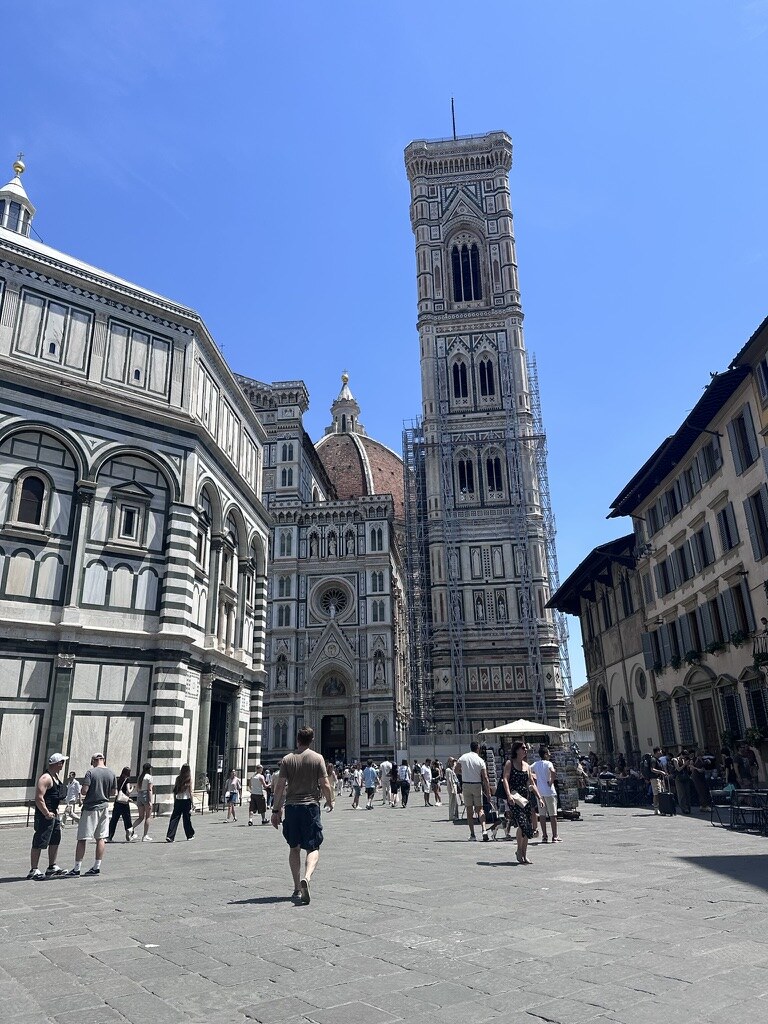
Florence Duomo and Brunelleschi's dome — which pass, which climb, and how to plan it
Brunelleschi, Giotto or Ghiberti pass? Dome or bell tower? The free cathedral queue, the 463 steps, and the museum almost everyone skips.
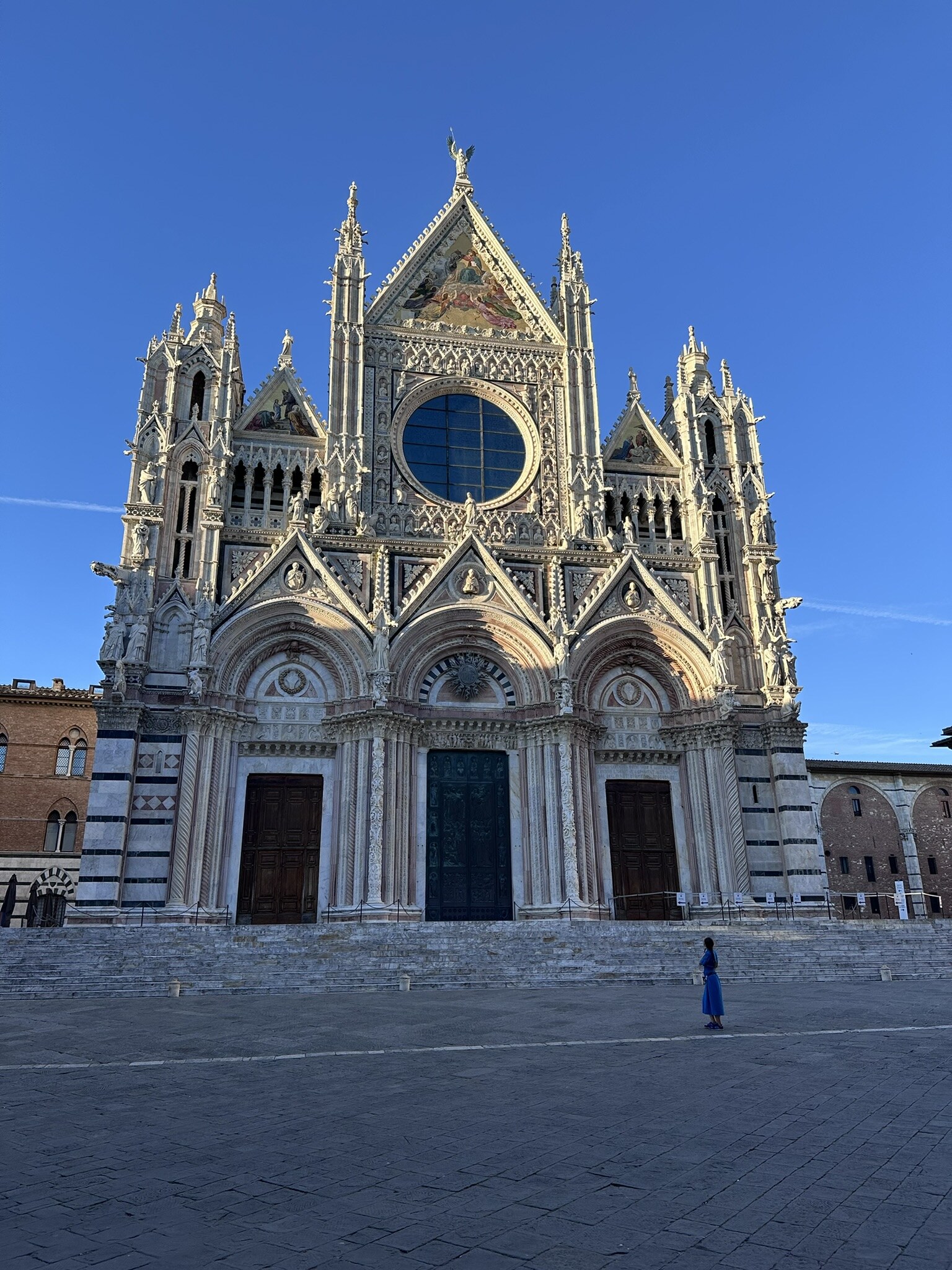
Siena Cathedral — the floor, the library, the rooftops, and which ticket to buy
When the marble floor is uncovered in 2026, the OPA SI Pass versus the Gate of Heaven, and the order to see the complex in half a day.
The Uffizi Gallery — tickets, what to see, and how to do it well
Tickets and timed slots, the dozen-odd works worth planning around, the Vasari Corridor, and how to see the Uffizi in two hours without hating it.