 ← Siena
Val d'Orcia
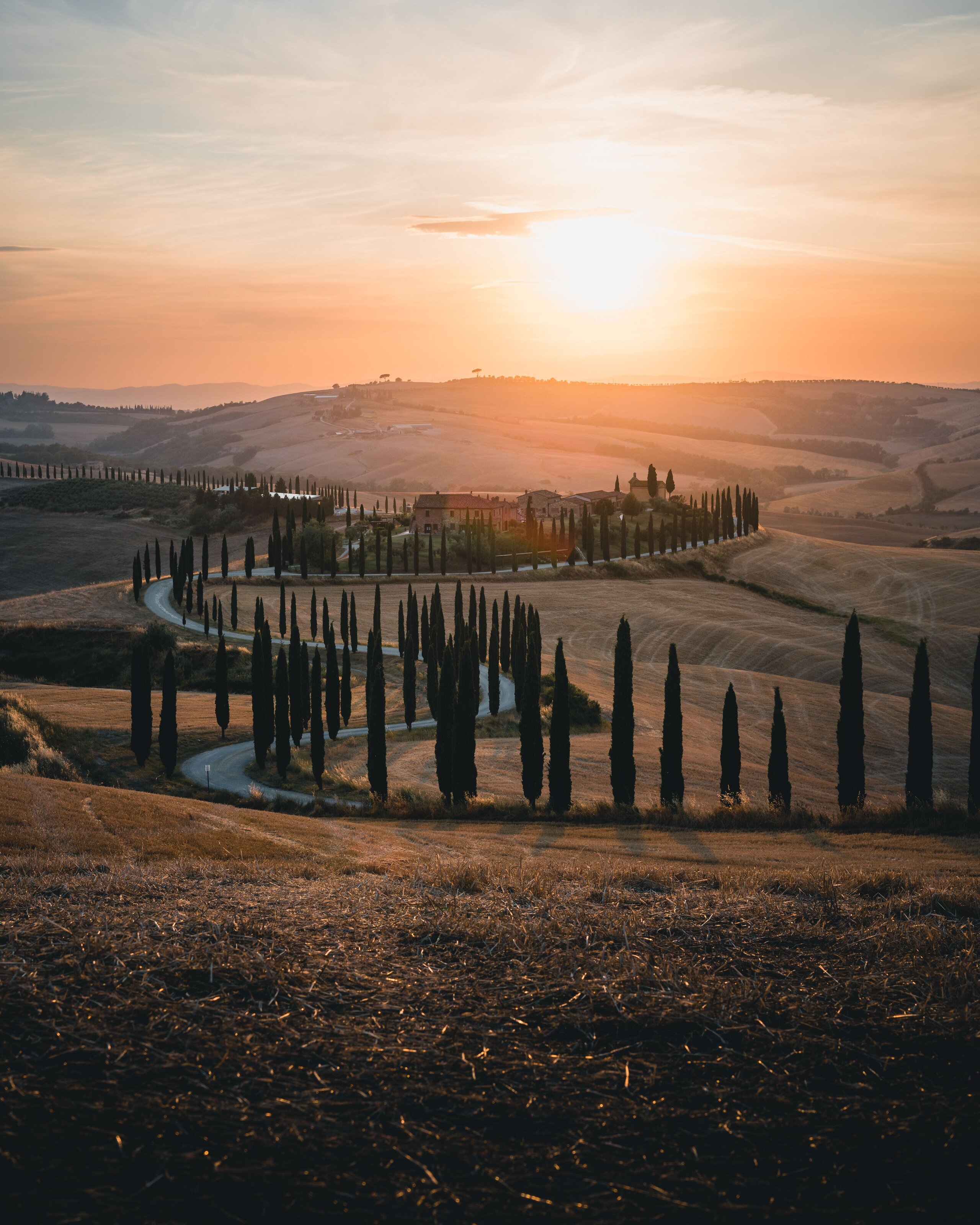
The Val d'Orcia is the valley south of Siena where the classic Tuscan images come from — cypress avenues, rolling wheat hills and hilltop towns like Pienza and Montalcino. It has been a UNESCO World Heritage landscape since 2004. Base in Pienza or San Quirico and allow at least two nights.
By Sara Toniolo · Last checked 29 October 2026
What to see.
Pienza, the ideal Renaissance town
Highlight · Val d'Orcia
Montalcino and Brunello
Highlight · Val d'Orcia
Bagno Vignoni's thermal square
Highlight · Val d'Orcia
Cappella di Vitaleta
Highlight · Val d'Orcia
About Val d'Orcia
Why the Val d'Orcia looks the way it does
The valley of the river Orcia, in the south of Siena province, was redesigned on purpose. In the 14th and 15th centuries Sienese merchants bought up the land and managed it as an agricultural estate laid out to be looked at — farmhouses on crests, cypresses planted along drives and boundaries, towns perched where they could be seen. UNESCO listed it in 2004 as a cultural landscape for exactly that reason: it is a Renaissance idea of the good countryside, still being farmed.
Underneath is pale clay that cracks into calanchi and biancane badlands, and the volcanic cone of Monte Amiata closes the view to the south. The palette changes completely by season: green in April, gold in June, ploughed brown and grey in autumn and winter.
The towns
Pienza. Pope Pius II rebuilt his birthplace from 1459 as an 'ideal city', and the centre — cathedral, Palazzo Piccolomini and the square between them — is a UNESCO site in its own right. Walk the panoramic Via dell'Amore lane along the walls and buy pecorino from any of the shops on Corso Rossellino. Our Pienza and Val d'Orcia guide goes deeper.
Montalcino. A hilltop town with a fortress and some 200 wine producers making Brunello di Montalcino, one of Italy's most collected reds. The Fortezza houses a wine bar; the abbey of Sant'Antimo is 15 minutes south.
San Quirico d'Orcia. The most practical base: flat, central, with the formal Horti Leonini gardens and a Romanesque collegiate church. Several of the famous cypress viewpoints are within ten minutes' drive.
Bagno Vignoni. A hamlet whose main square is a 16th-century thermal pool. You can't bathe in the square itself; use the public pools or the hotel spas nearby, or the free hot-water channels below the village at the Parco dei Mulini.
Castiglione d'Orcia and Rocca d'Orcia. Two hamlets around a ruined fortress, the Rocca di Tentennano, with one of the best panoramas of the whole valley.
Monticchiello. A tiny walled village above Pienza known for its 'poor theatre', a community play staged each summer by the villagers themselves.
Radicofani. The southern outpost on the old Via Francigena pilgrim route, with a fortress on a basalt crag that you see from everywhere in the valley.
Montepulciano is technically in the neighbouring Val di Chiana, but it's 20 minutes from Pienza and most trips combine them.
The viewpoints
Cappella della Madonna di Vitaleta. The small chapel framed by cypresses between San Quirico and Pienza. Reachable on foot along a gravel track; there's no access by car.
The cypress circle near San Quirico (the cipressi di San Quirico), on the SR2 just north of town.
The zig-zag cypress road at Monticchiello. Best from the lay-by below the village in late afternoon.
The Gladiator fields below Pienza. The stretch of farmland below the town walls was used for the Elysian Fields scenes in the 2000 film.
Our Val d'Orcia photography guide has the routes, timing and light for each.
Wine and food
Brunello di Montalcino is 100% Sangiovese, aged at least five years before release (six for Riserva). Rosso di Montalcino is its younger, cheaper sibling, and the one to drink with lunch. Book tastings in advance; Montalcino producers range from family cellars to large estates.
Further east, Vino Nobile di Montepulciano is the other great Sangiovese of the area, and Orcia DOC covers the valley floor itself.
On the table: pici, the thick hand-rolled pasta; pecorino di Pienza, from fresh to aged in walnut leaves or ash; Cinta Senese pork; and saffron, which is grown again around San Gimignano and in the valley.
For how this compares to the wine country further north, see Chianti vs Val d'Orcia.
Where to base
Pienza. The prettiest base, with the most restaurants inside the walls. Busy at midday, lovely in the evening.
San Quirico d'Orcia. Central, flat, practical, and better value. Our pick for a first visit with a car.
Montalcino. If wine is the point of the trip. Further west, so add 20–30 minutes to the eastern sights.
A farmhouse on the valley floor. The view you came for, from your terrace. You'll drive everywhere, including to dinner.
Bagno Vignoni. Small and quiet after dark, with thermal hotels — a good choice in cooler months.
What to skip
Doing it as a day trip from Florence. It's two hours each way, and the light that makes the valley famous is at dawn and dusk. Stay at least one night.
Parking on the verge for photos. The SR2 and SP146 are busy, narrow roads. Use proper lay-bys; stopping on the carriageway can earn a fine.
Walking into private fields. Most of the famous viewpoints are working farmland. Stay on public tracks.
Best time to visit
Late April to May. Green hills, poppies and long evenings. The most photographed season for a reason.
June. Wheat turns gold; harvest and baling begin by early July.
September and October. Wine harvest, mushroom and truffle season, softer light, fewer coaches. The Sagra del Tordo in Montalcino is held on the last weekend of October.
Winter. Bare and misty, with dramatic mornings for photography. Quiet, and some places close.
Month-by-month detail is in when to visit Tuscany.
Getting there and around
By car from Siena on the SR2 Via Cassia (about an hour to San Quirico), or from the A1 motorway at the Chiusi–Chianciano exit. From Rome, about two hours.
Public transport is limited: Autolinee Toscane buses link Siena with Buonconvento, Montalcino, San Quirico and Pienza a few times a day, more on school days. Fine for a slow trip between two towns, but you won't reach the viewpoints.
Many visitors walk or cycle sections of the Via Francigena, which crosses the valley from San Quirico to Radicofani.
Frequently asked.
- Where is the Val d'Orcia?
- In southern Tuscany, in the province of Siena, roughly 45–60 minutes south of Siena by car. Its main towns are Pienza, Montalcino, San Quirico d'Orcia, Castiglione d'Orcia and Radicofani.
- What is the best town to stay in Val d'Orcia?
- Pienza for atmosphere and restaurants, San Quirico d'Orcia for a central, practical base, Montalcino for wine. A farmhouse between them gives you the classic views from your own terrace.
- Is Val d'Orcia a UNESCO site?
- Yes. The Val d'Orcia was added to the UNESCO World Heritage List in 2004 as a cultural landscape. Pienza's historic centre has been a separate UNESCO site since 1996.
- How many days do you need in Val d'Orcia?
- Two nights covers Pienza, Montalcino, Bagno Vignoni and the main viewpoints at the right times of day. Three or four lets you add Montepulciano, Sant'Antimo and a slower winery visit.
- Can you see the Val d'Orcia without a car?
- Only partly. Buses from Siena reach Montalcino, San Quirico and Pienza, but not the cypress viewpoints or most wineries. A car or a hired driver makes a far better trip.
Read our practical basics before you book — when to come, where to base, how to get around.
Other areas to combine.
Stories for Val d'Orcia.
Pienza and the Val d'Orcia, a guide
The Renaissance-pope's experiment in town planning, and the photogenic countryside around it.
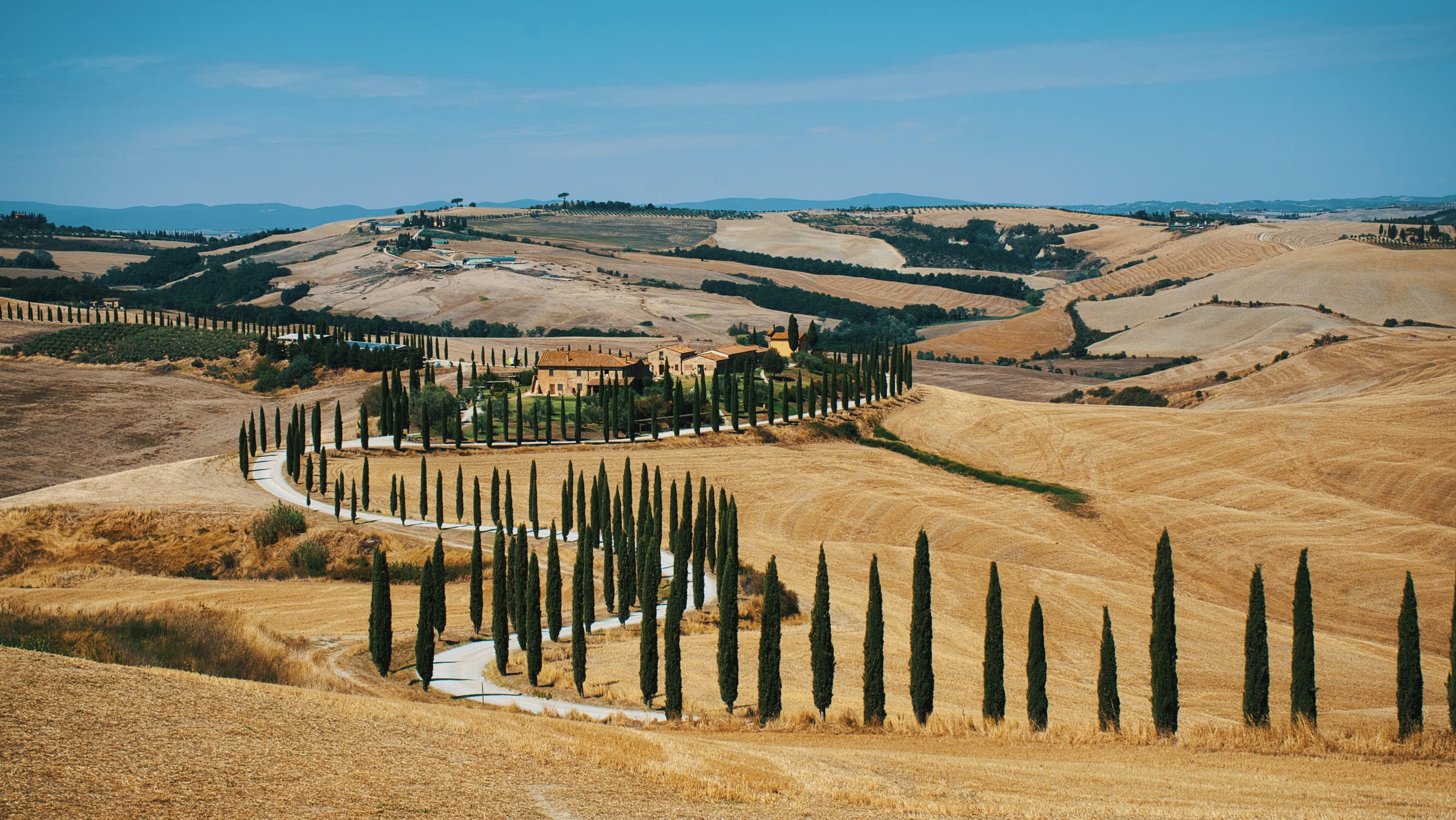
Photographing Val d'Orcia without clichés
Yes, the lone cypress. But also: backroads, late-afternoon mist, and why dawn beats sunset.
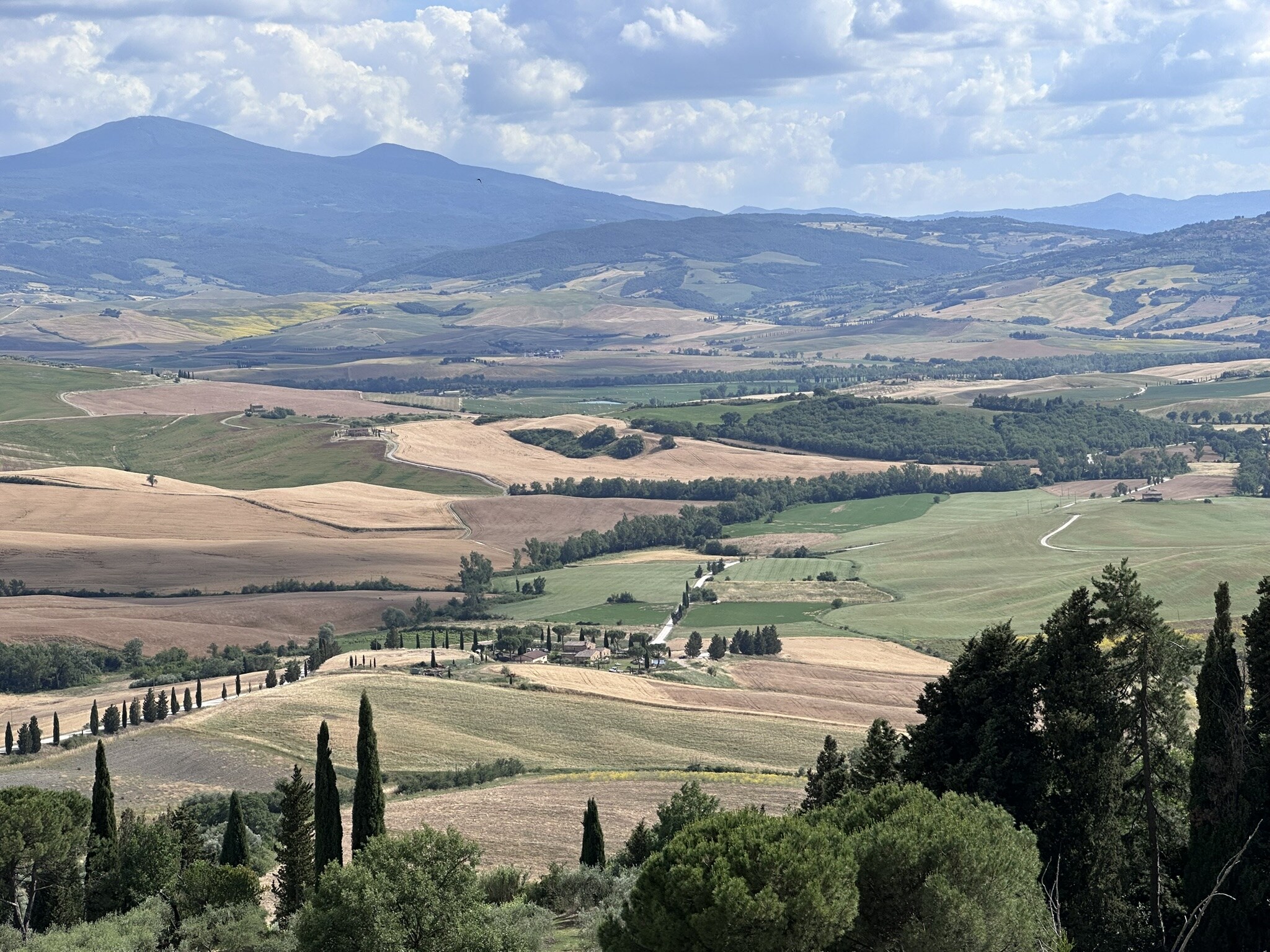
Chianti vs Val d'Orcia — which to base in
Both inside Siena province, both world-famous, very different trips. Wine, landscape, crowds, drive times, and which one suits you.
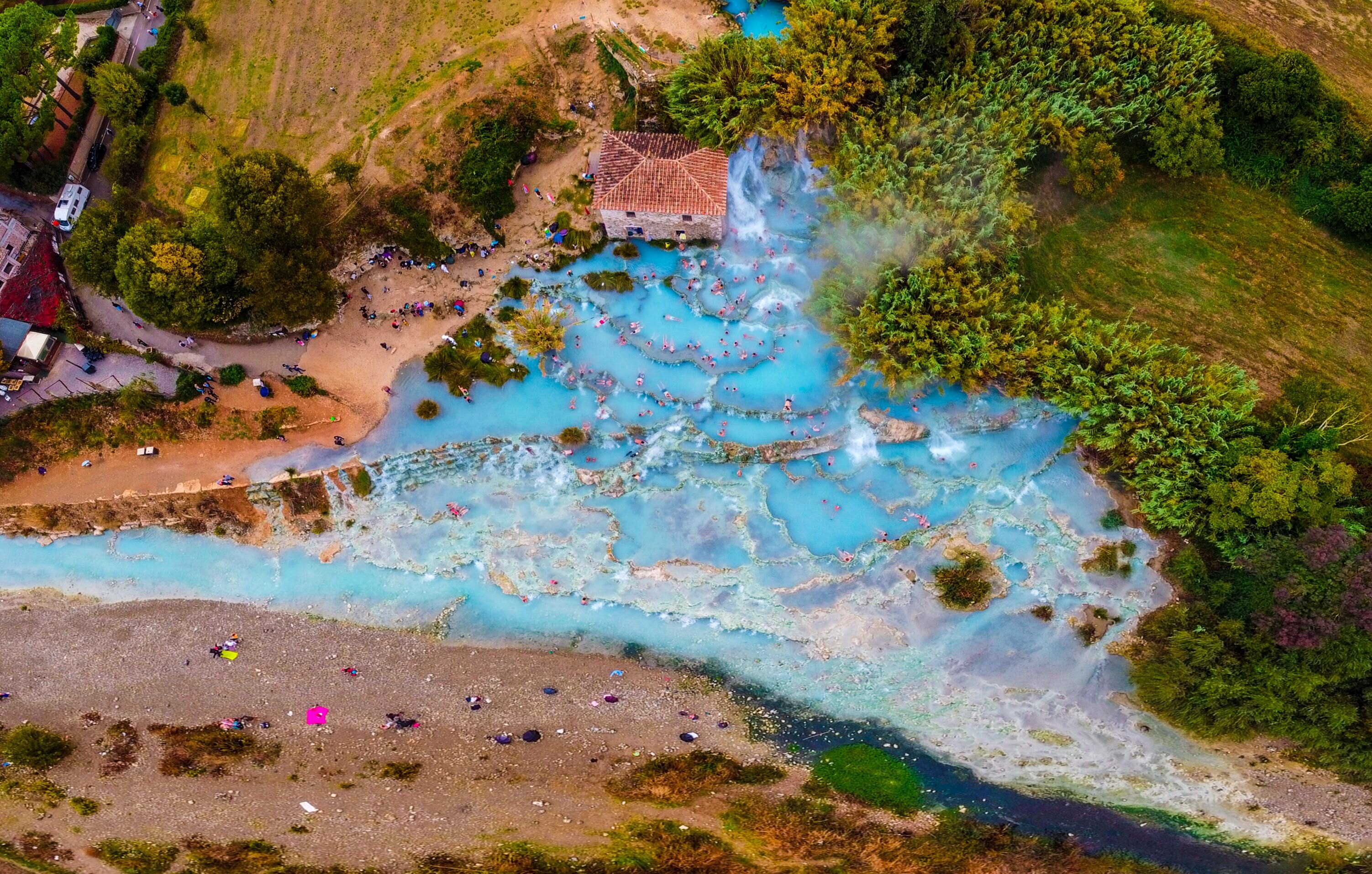
Soaking at Saturnia, free and paid
The cascade everyone posts about, plus three quieter alternatives within 20km — and the rules nobody tells you.