The Uffizi Gallery — tickets, what to see, and how to do it well
Tickets and timed slots, the dozen-odd works worth planning around, the Vasari Corridor, and how to see the Uffizi in two hours without hating it.
Tickets and timed slots, the dozen-odd works worth planning around, the Vasari Corridor, and how to see the Uffizi in two hours without hating it.
Tickets and timed entry
Prices. €25 for a standard ticket bought on the day; €29 bought in advance, which includes the reservation and a timed entry slot. Since January 2026 there is a cheaper afternoon ticket for entry from 4pm (€16 on the day). Under-18s enter free, and EU citizens aged 18–25 pay a reduced €2 — check the eligibility rules on the official site before you rely on it.
Where to book. Use the official Uffizi website (uffizi.it), which sells timed tickets directly. Resellers charge more for the same slot and their 'skip-the-line' simply means a reservation you could have made yourself.
Combined ticket. The PassePartout (€40) covers the Uffizi, Palazzo Pitti and the Boboli Gardens over five consecutive days, with the Uffizi booked as the first visit. Worth it if you'll see Pitti too.
Free days. National museums are free on the first Sunday of each month. Free means no reservations and very long queues — fine if you're already in Florence and patient, not worth planning a trip around.
Opening hours. Tuesday to Sunday, 8:15–18:30; the ticket office closes earlier, so arrive by 5:30pm at the latest. Closed Mondays, 1 January and 25 December. Hours change for special openings; check before you go.
When to go
The galleries are busiest from 10am to 3pm, when tour groups move through in waves. The two calm windows are the first slot of the morning and the last two hours of the day — which is also when the afternoon ticket applies.
Weekdays beat weekends; Tuesdays are busy because the museum was shut on Monday. November to February is noticeably quieter than spring or summer, and the light through the corridor windows over the Arno is lovely on a clear winter afternoon.
The works to plan around
The Uffizi has over 100 rooms. Most visitors burn out by the Renaissance. Go in with a short list and walk past everything else without guilt. Room numbers change when works are rehung; ask a guard if something has moved.
The three Maestà (Room 2). Cimabue, Duccio and Giotto painted the same subject — the Virgin enthroned — within about forty years of each other. Side by side, you watch painting move from Byzantine gold towards real bodies in real space. The best room in the building for understanding what came next.
Gentile da Fabriano's Adoration of the Magi (Room 7). International Gothic at its most lavish — gold, brocade, horses and monkeys.
Piero della Francesca's Duke and Duchess of Urbino (Room 8). Two profile portraits facing each other across a landscape, the duke's broken nose included.
Botticelli's Primavera and The Birth of Venus (Rooms 10–14). The rooms you'll queue for inside the museum. Stand back from the crowd at the front; both paintings read better from a few metres away.
Leonardo's Annunciation and Adoration of the Magi (Room 35). The Annunciation is an early work; the unfinished Adoration, restored in 2017, shows his underdrawing and thinking.
Michelangelo's Doni Tondo (Room 35). His only finished panel painting in Florence, with the original carved frame. Sculptural, acid-coloured, strange.
Raphael's Madonna of the Goldfinch (Room 66). Restored after it was found in pieces in the 16th century. Next to it, his portrait of Pope Leo X.
Titian's Venus of Urbino (Room 83). The reclining nude that Manet answered three centuries later with Olympia.
Caravaggio's Bacchus and Medusa (Room 90). The Medusa is painted on a convex ceremonial shield. In the same rooms, Artemisia Gentileschi's Judith Slaying Holofernes.
A two-hour route
Start on the second floor and go straight to Rooms 2 and 7–8 (30 minutes), then the Botticelli rooms (20 minutes). Walk the east corridor slowly — the ceilings and the Roman sculpture are part of the point — and cross the short south corridor for the view of the Ponte Vecchio and the Arno.
Stop at the terrace café above the Loggia dei Lanzi for a coffee with a view over Piazza della Signoria. Then take the stairs down to the first floor for Leonardo and Michelangelo (Room 35), Raphael, Titian and Caravaggio (40 minutes).
That is two hours at a steady pace. A thorough visit takes four hours or more; most people are better off coming back on a second day.
The Vasari Corridor
In 1565 Cosimo I had Vasari build a private elevated passage from Palazzo Vecchio, through the Uffizi, across the top of the Ponte Vecchio and on to Palazzo Pitti — so the duke could cross the city without meeting the people in it. It reopened to the public in December 2024 after years of closure and renovation.
Entry is by separate, named, non-refundable ticket with a mandatory reservation: €43 combined with the Uffizi on the day, €47 in advance, and cheaper Friday-evening slots. Numbers are limited, so book well ahead. The highlight is the walk itself: the window over the Ponte Vecchio, and the view down into the church of Santa Felicita from the Medici family's private box.
Practicalities
Security. Expect airport-style bag checks at the entrance. Large backpacks, umbrellas and luggage go to the cloakroom; travel light.
Photos. Allowed without flash, selfie sticks or tripods.
Food. The terrace café is the only option inside. Eat beforehand, or after: the streets around Via de' Neri, east of the museum, are better than anything on the piazza.
Accessibility. The galleries have lifts between floors; check the accessibility page on the official site for current entry arrangements.
Pair it with. The Accademia and Michelangelo's David on a different morning, and the Duomo and Brunelleschi's dome. For the wider city, see our Florence guide.
Frequently asked.
- How much are Uffizi Gallery tickets in 2026?
- A standard ticket costs €25 on the day or €29 booked in advance with a timed entry slot. From 1 January 2026 there's an afternoon ticket for entry from 4pm at €16. Under-18s enter free. The Uffizi + Vasari Corridor ticket costs €43 on the day or €47 in advance.
- Do I need to book Uffizi tickets in advance?
- Strongly recommended from March to October and on weekends year-round. Booking gives you a timed slot and avoids the ticket queue. Book on the official Uffizi website rather than through resellers.
- How long do you need at the Uffizi?
- Two hours covers the highlights — Giotto, Botticelli, Leonardo, Michelangelo, Raphael, Titian and Caravaggio. A thorough visit takes four hours or more.
- When is the Uffizi closed?
- Every Monday, plus 1 January and 25 December. It's open Tuesday to Sunday from 8:15 to 18:30.
- Is the Uffizi free on the first Sunday of the month?
- Yes, under Italy's free-museum Sunday scheme. Reservations aren't available on free days, and queues can be very long.
Keep reading.
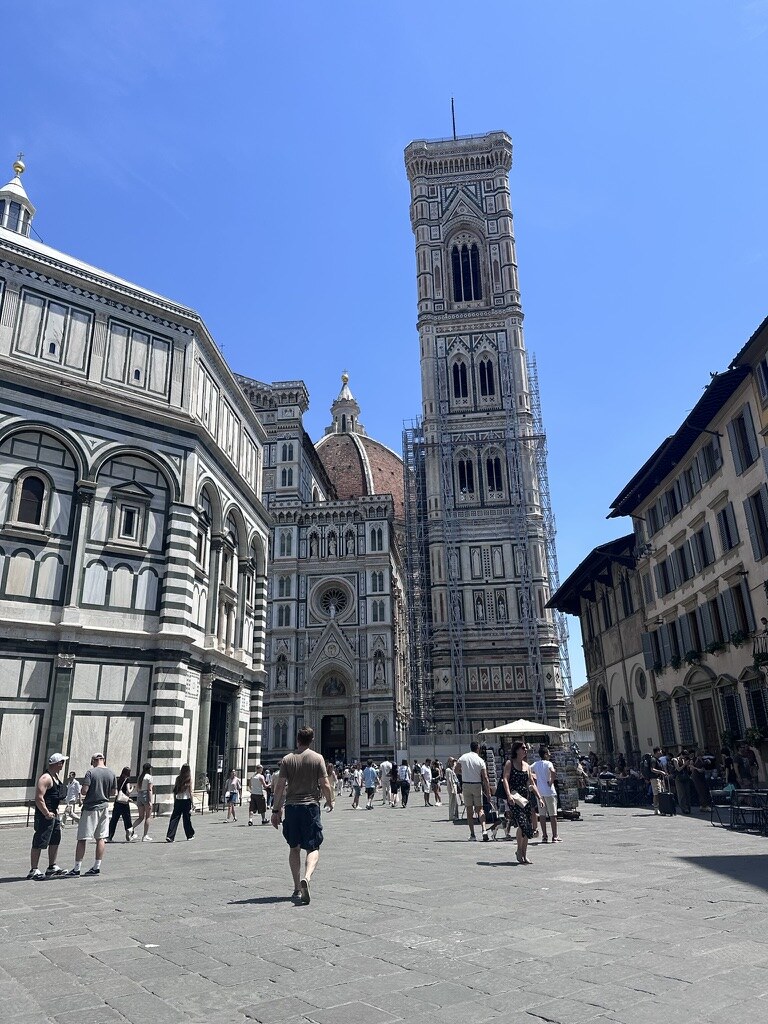
Florence Duomo and Brunelleschi's dome — which pass, which climb, and how to plan it
Brunelleschi, Giotto or Ghiberti pass? Dome or bell tower? The free cathedral queue, the 463 steps, and the museum almost everyone skips.
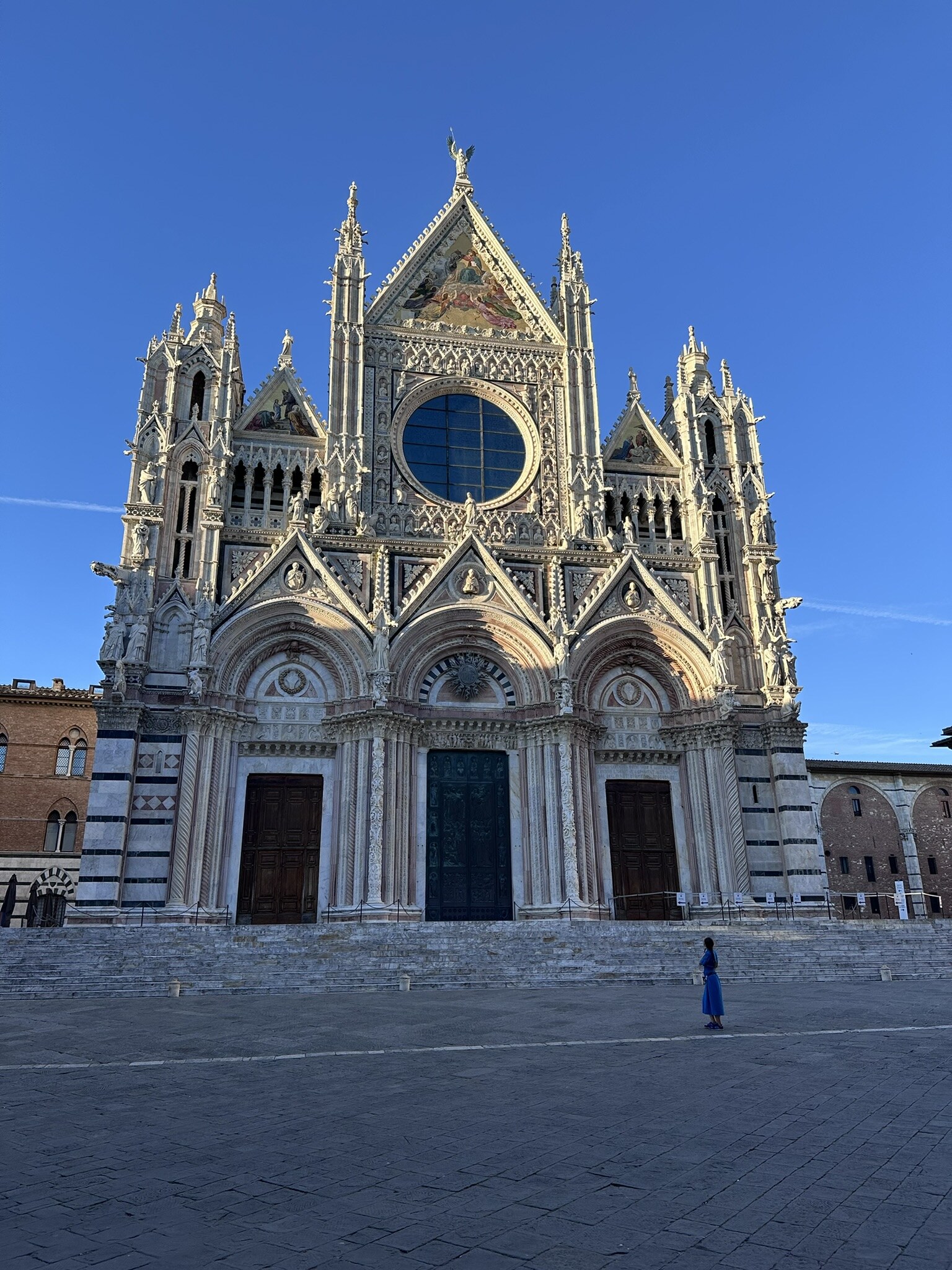
Siena Cathedral — the floor, the library, the rooftops, and which ticket to buy
When the marble floor is uncovered in 2026, the OPA SI Pass versus the Gate of Heaven, and the order to see the complex in half a day.
Michelangelo's David at the Accademia — tickets, timing, and what else is inside
The 2026 ticket price, the best time to see David without a crowd, the unfinished Prisoners that explain him, and why an hour is enough.