 ← Grosseto
Maremma
The Maremma is Tuscany's wild southern quarter — reclaimed marshland, empty beaches, cork-oak hills, hot springs and towns carved from volcanic tufa. Most of it lies in Grosseto province. Base on the coast for beaches and the nature park, or inland near Pitigliano and Saturnia.
By Giulia Moretti · Last checked 29 October 2026
What to see.
Parco della Maremma
Highlight · Maremma
Pitigliano, Sovana and Sorano
Highlight · Maremma
Saturnia hot springs
Highlight · Maremma
Monte Argentario
Highlight · Maremma
About Maremma
What the Maremma is
Maremma means, roughly, 'maritime land'. Historically it was the malarial coastal plain running from south of Livorno down into northern Lazio — fertile, empty and feared. Grand-ducal and then 20th-century reclamation drained the marshes, and the last malaria was gone by the 1950s. What remained was a part of Tuscany that missed the Renaissance building boom and the mass-tourism one: big farms, few towns, long beaches.
Today the Tuscan Maremma is mostly the province of Grosseto, plus the southern edge of Livorno province and the hills around Massa Marittima (the Alta Maremma). It divides naturally into three parts: the coast, the tufa country inland to the south-east, and the metal hills to the north.
The Maremma's cattlemen, the butteri, still work long-horned Maremmana cattle on horseback. Several farms near Alberese put on demonstrations and let experienced riders ride out with them.
The coast
Parco Naturale della Maremma. The Monti dell'Uccellina nature park runs between Principina a Mare and Talamone: pine woods, marsh, wild boar, deer and a long sandy beach at Marina di Alberese that you reach through the park. Marked trails start from the visitor centre in Alberese; some are guided-only or seasonal, and in summer a few close during the hottest hours for fire risk.
Castiglione della Pescaia. The most attractive resort town on this coast, with a walled old town above a fishing harbour, and pine-backed beaches either side.
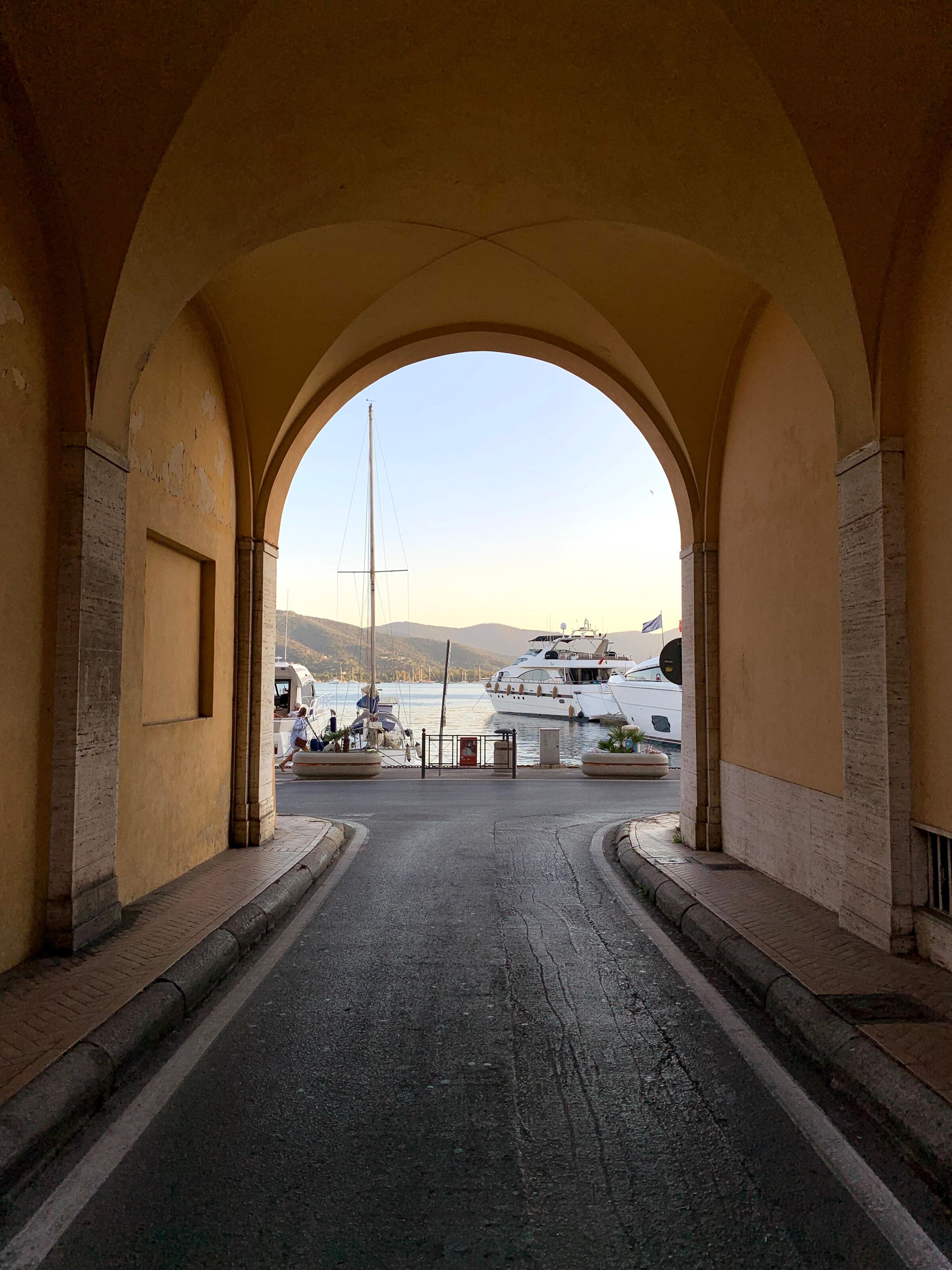
Monte Argentario. A former island tied to the mainland by two long sandbars, with the lagoon town of Orbetello on a third spit between them, linked to the promontory by a causeway. Porto Santo Stefano and Porto Ercole are the harbour towns; the panoramic road round the promontory is spectacular and partly unsealed. Ferries to the island of Giglio leave from Porto Santo Stefano.
Capalbio. A small walled village above a long, quiet beach, popular with Roman weekenders. Nearby is Niki de Saint Phalle's Giardino dei Tarocchi, a sculpture garden of giant mosaic figures; it opens seasonally, so check dates.
The tufa country
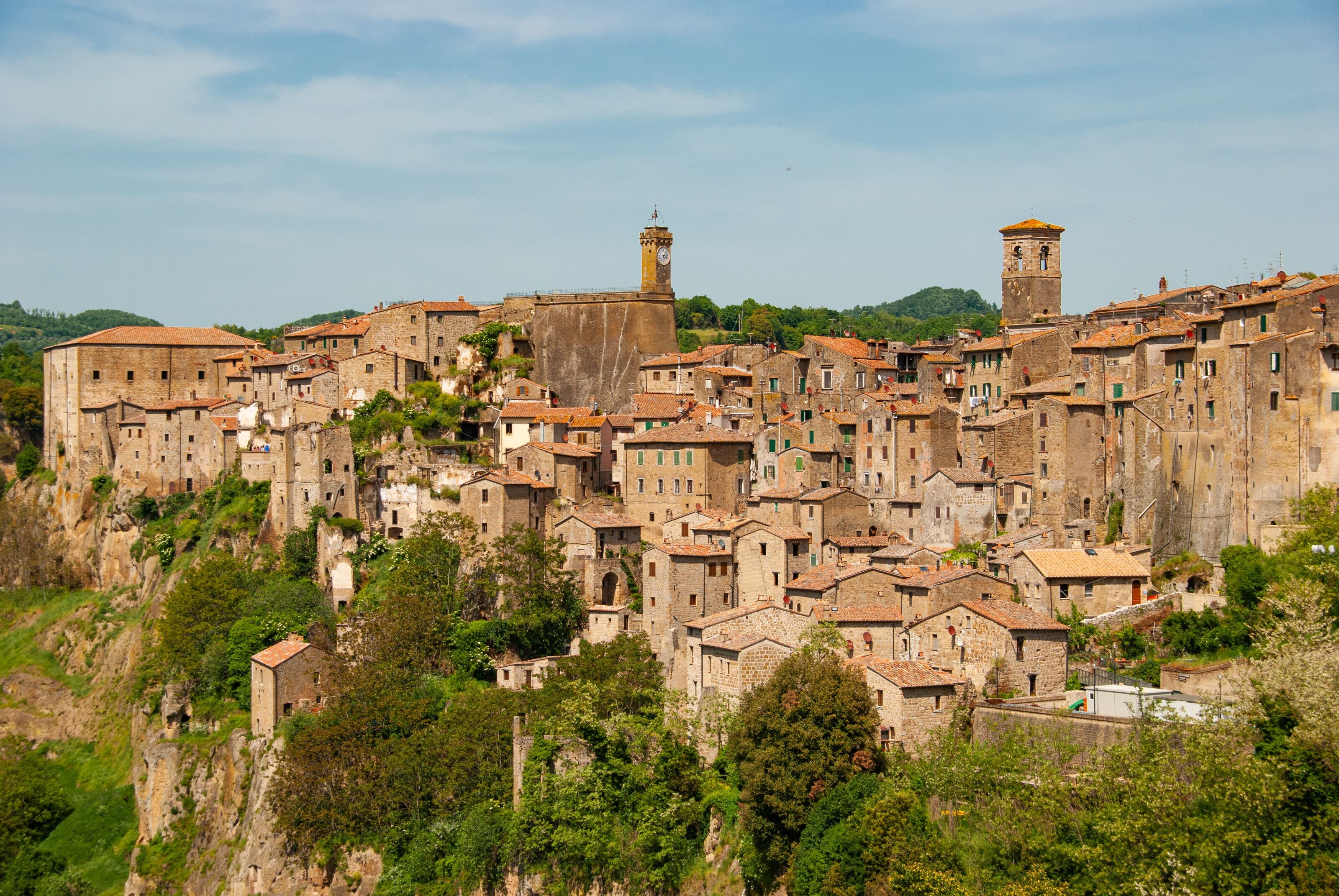
In the south-east, volcanic tufa forms cliffs that towns are built on and carved into. It's the most dramatic landscape in southern Tuscany.
Pitigliano. A town that seems to grow out of its cliff, with a centuries-old Jewish quarter once called 'little Jerusalem' — the synagogue, ritual bath and kosher bakery are open to visit.
Sovana. A one-street village with a Romanesque cathedral and an Etruscan necropolis outside town, including the carved temple-tomb Tomba Ildebranda.
Sorano. A fortress town above a gorge, half-abandoned and very atmospheric.
Between them run the vie cave, Etruscan sunken roads cut up to 20 metres deep into the rock. Walk at least one; the Via Cava di San Giuseppe out of Pitigliano is the easiest to find.
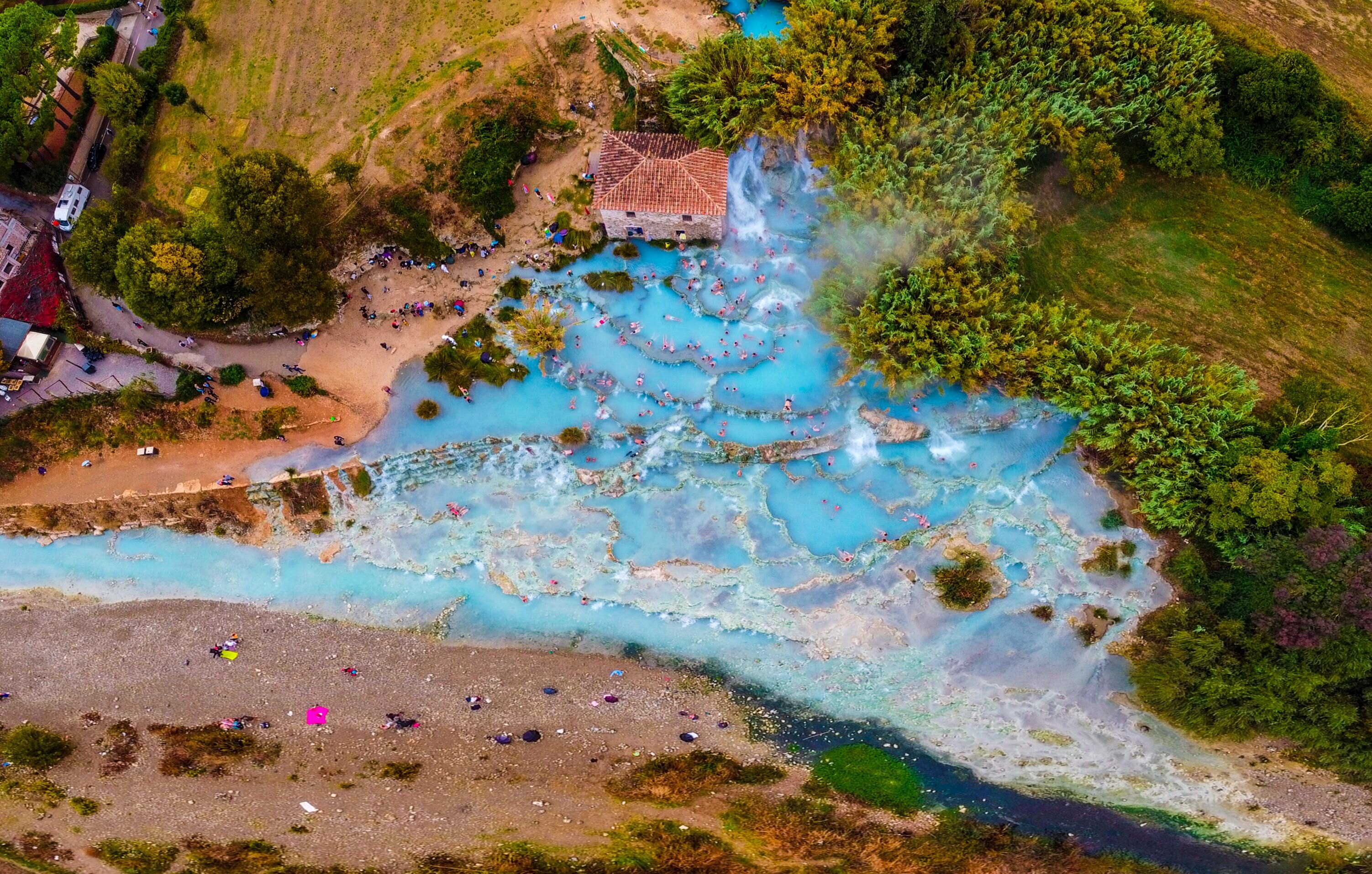
Saturnia. The free hot-water cascades at the Cascate del Mulino are the Maremma's best-known sight, warm year-round at around 37°C. See our Saturnia guide for timing and the alternatives.
The northern hills
Massa Marittima. A hill town with one of the finest cathedral squares in Tuscany, built on the wealth of the copper, silver and iron mines in the surrounding Colline Metallifere.
Roccatederighi, Montemassi and Sassetta. Small villages on rock spurs in cork-oak and chestnut country, with almost no visitors.
Monte Amiata. The extinct volcano on the Maremma's eastern edge — chestnut woods, cool summers and a small ski area in winter.
Food and wine
Morellino di Scansano is the local Sangiovese, easy and fruity; the coast around Bolgheri to the north makes the grander reds (see the Etruscan Coast). Whites from Ansonica and Vermentino suit the seafood.
Eat acquacotta, the onion-and-bread soup topped with an egg; wild boar (cinghiale) in every form; tortelli with ricotta and chard; and, on the coast, Orbetello lagoon fish such as smoked eel and bottarga.
Where to base
Castiglione della Pescaia or Marina di Grosseto. For a beach holiday with the nature park and the city of Grosseto close by.
Orbetello or Argentario. For boats, swimming off rocks and seafood; more expensive in July and August.
Pitigliano or a farm near Saturnia. For the tufa towns, the hot springs and quieter nights. Combine with a few days on the coast.
Massa Marittima. For walkers and anyone driving between the Maremma and the Val d'Orcia or Siena.
What to skip
Saturnia's cascades at midday in August. Packed, hot, and parking is chaotic. Go at dawn or after dark.
Trying to see the coast and tufa country in one day. They're more than an hour apart on slow roads.
The Aurelia (SS1) at weekend peak times in summer. The main coast road clogs with beach traffic on Saturday mornings and Sunday evenings.
Best time to visit
May–June and September. Warm sea, open trails and uncrowded beaches. The best months for most trips.
July–August. Hot and busy on the coast; inland stays quieter. Some park trails restrict access in the heat.
October–March. Wild and empty. Good for walking, Saturnia and the tufa towns, but many beach businesses close.
Getting there
By car from Rome (about 2 hours on the Aurelia) from Siena (about 1h 15m to Grosseto on the E78) or Florence (about 2 hours). Rome Fiumicino is often the closest major airport for the southern Maremma; Pisa for the north.
Trains on the Rome–Pisa coastal line stop at Grosseto, Orbetello–Monte Argentario, Capalbio and Talamone, but inland you need a car.
Frequently asked.
- Where is the Maremma in Tuscany?
- In the south-west of Tuscany, mostly in the province of Grosseto, with its northern edge reaching into Livorno province. It runs along the coast from roughly Follonica to the border with Lazio and inland to Monte Amiata.
- Is the Maremma worth visiting?
- Yes, if you want nature, beaches and hot springs rather than art cities. It's quieter and less built-up than northern Tuscany, with a protected coastal nature park, the tufa towns of Pitigliano and Sorano, and Saturnia's free thermal falls.
- What is the best town to stay in the Maremma?
- Castiglione della Pescaia for the coast, Orbetello or Argentario for boats and seafood, and Pitigliano or a farm near Saturnia for the inland tufa towns and hot springs.
- Do you need a car in the Maremma?
- Yes, for anything beyond the coastal train towns. Inland villages, the nature park entrances and the hot springs are poorly served by public transport.
Read our practical basics before you book — when to come, where to base, how to get around.